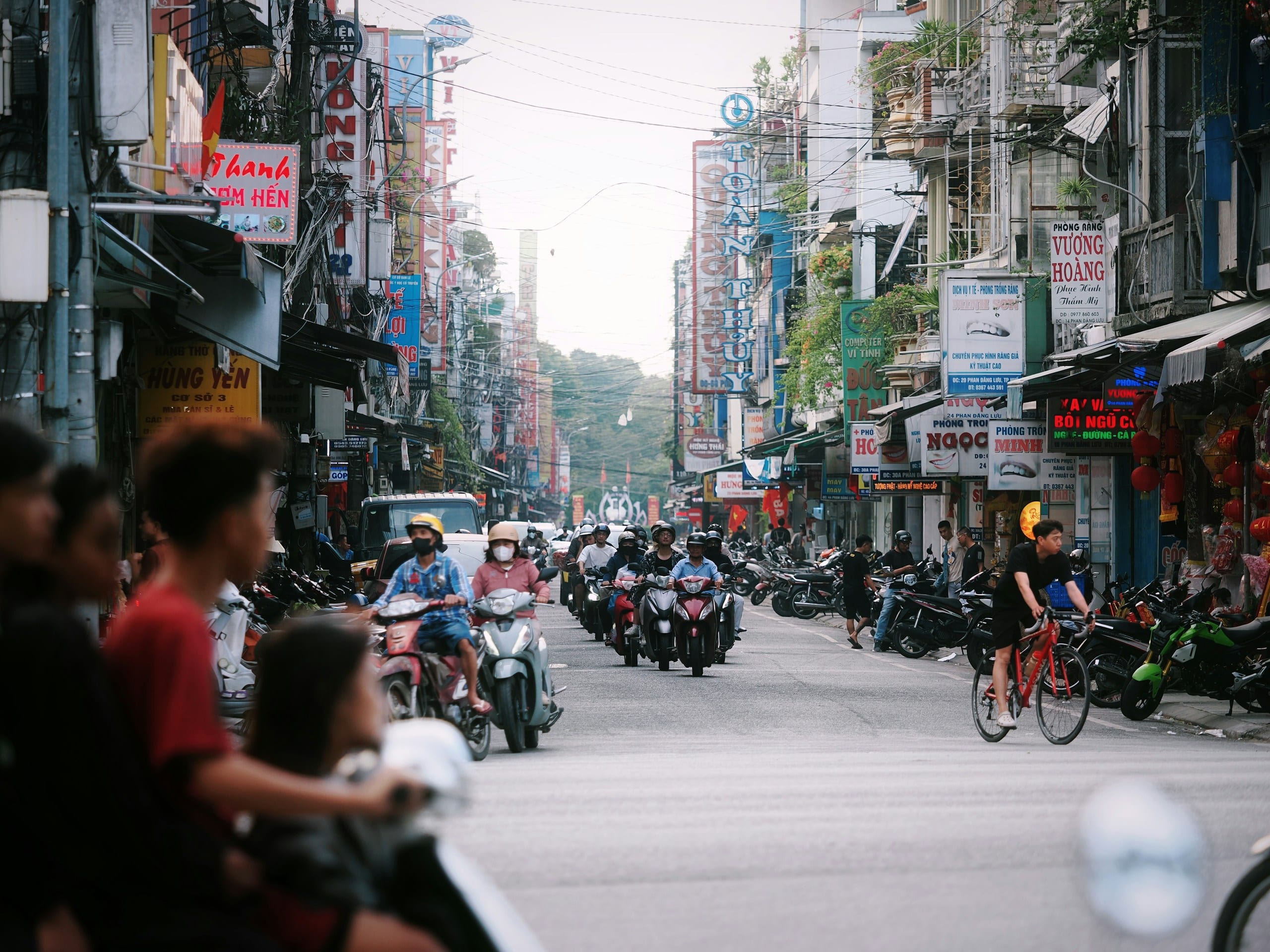
The first thing that hits you in Ho Chi Minh City is not a smell or a sight. It is sound: a million small engines idling, revving, honking, weaving, as if the whole city were one organism with a two-stroke heartbeat. I stood on the curb outside Tan Son Nhat airport with my bag and watched traffic pour around a woman carrying three stacked lunch boxes on a bicycle, and I understood why people still call this place Saigon even though the official name changed half a century ago. Saigon is what it feels like. Ho Chi Minh City is what it says on the visa form.
I came for four nights in March, between a week in Hoi An and a flight home. Hoi An had been lanterns and river walks and tailor shops that close at reasonable hours. Saigon was the opposite: a flat, sprawling southern city of roughly nine million people where the sidewalks belong to parked scooters, the coffee is sweet enough to count as dessert, and the best meals cost less than a New York subway swipe.
What it actually is
Ho Chi Minh City sits in the Mekong Delta's upper edge in southern Vietnam, about 1,100 km south of Hanoi. It is the country's economic engine — glass towers in District 1, garment factories in the suburbs, container ships on the Saigon River — and the usual entry point for travellers flying in from Bangkok or Singapore.
The tourist map compresses into a few square kilometres around District 1: Ben Thanh Market, the Reunification Palace, Notre-Dame Cathedral Basilica (still under scaffolding when I visited), the Central Post Office designed by Gustave Eiffel's office, and the War Remnants Museum. That cluster is real and worth half a day. It is also not the city. The city is District 3's tree-lined streets where apartment balconies overflow with plants, the coffee shops on every corner where locals sit on plastic stools at 7 a.m., and the alleyways — hẻm — that open into hidden courtyards with a pho pot steaming at the back.
Locals use both names. Saigon for warmth and habit; Ho Chi Minh City for paperwork. You will not offend anyone either way.
Learning to cross the street
This sounds like a joke until you try it. Traffic does not stop for pedestrians. It flows around them, the way water flows around a rock. The technique, explained to me by a hotel receptionist who had seen too many frozen foreigners, is simple and terrifying: walk at a steady pace, do not stop, do not run, do not make eye contact with the nearest motorbike as if you can negotiate. The swarm adjusts. It works. I crossed Nguyen Hue walking street on my third attempt without flinching and felt absurdly proud.
Motorbikes are the city's circulatory system. Grab (Southeast Asia's ride-hailing app) is cheap and reliable — most rides within central districts run 25,000–45,000 VND ($1–2). Walking is possible in District 1 but slow; the heat and the parked scooters on every pavement push you into the road. I used Grab for longer hops and walked when the distance was under twenty minutes and the sun was not at its peak.
Coffee first, then everything else
Vietnamese coffee culture is not a cafe aesthetic. It is a daily utility. Cà phê sữa đá — dark roast dripped through a metal phin filter over condensed milk and ice — costs 25,000–40,000 VND ($1–1.60) at a street stall and tastes like someone dissolved a chocolate bar in engine oil, in the best possible way.
I started each morning at a corner shop in District 3 where the owner knew my order by day two without us sharing a language. Sit on a low stool, wait for the drip, stir the milk up from the bottom. District 1's air-conditioned cafes are for Wi-Fi emergencies. The plastic-stool places are where Saigon runs.
The phin filter takes its time. So should you. Saigon rewards the person who sits still for fifteen minutes.
What is worth your time
District 1 on foot, early. Ben Thanh Market opens around 6 a.m. for locals buying produce; by 9 a.m. the tourist stalls dominate. Go early if you want to see the market working, late morning if you want souvenirs and will haggle. I bought a linen shirt for 280,000 VND ($11) after starting at half the asking price — standard practice, not rudeness.
The Central Post Office is free to enter: vaulted ceiling, old phone booths, a portrait of Ho Chi Minh at the far end. Notre-Dame Cathedral next door was wrapped in scaffolding when I visited; check before you plan around it. The Reunification Palace ($4–5 entry) preserves 1975 time-capsule style — the basement war room beats the banquet hall upstairs.
War Remnants Museum. I almost skipped this because I did not want my trip to become "Vietnam War greatest hits." I am glad I went. The museum on Vo Van Tan Street ($2–3 entry) is sober and does not soft-pedal what happened. The Agent Orange gallery is hard. Allow two hours. warremnantsmuseum.com.
Nguyen Hue Walking Street. A broad pedestrian boulevard running from City Hall to the Saigon River, lined with cafés and flower beds. At night it fills with families, street performers, and teenagers on electric scooters doing laps. Free, lively, and a good place to watch the city breathe after dark.
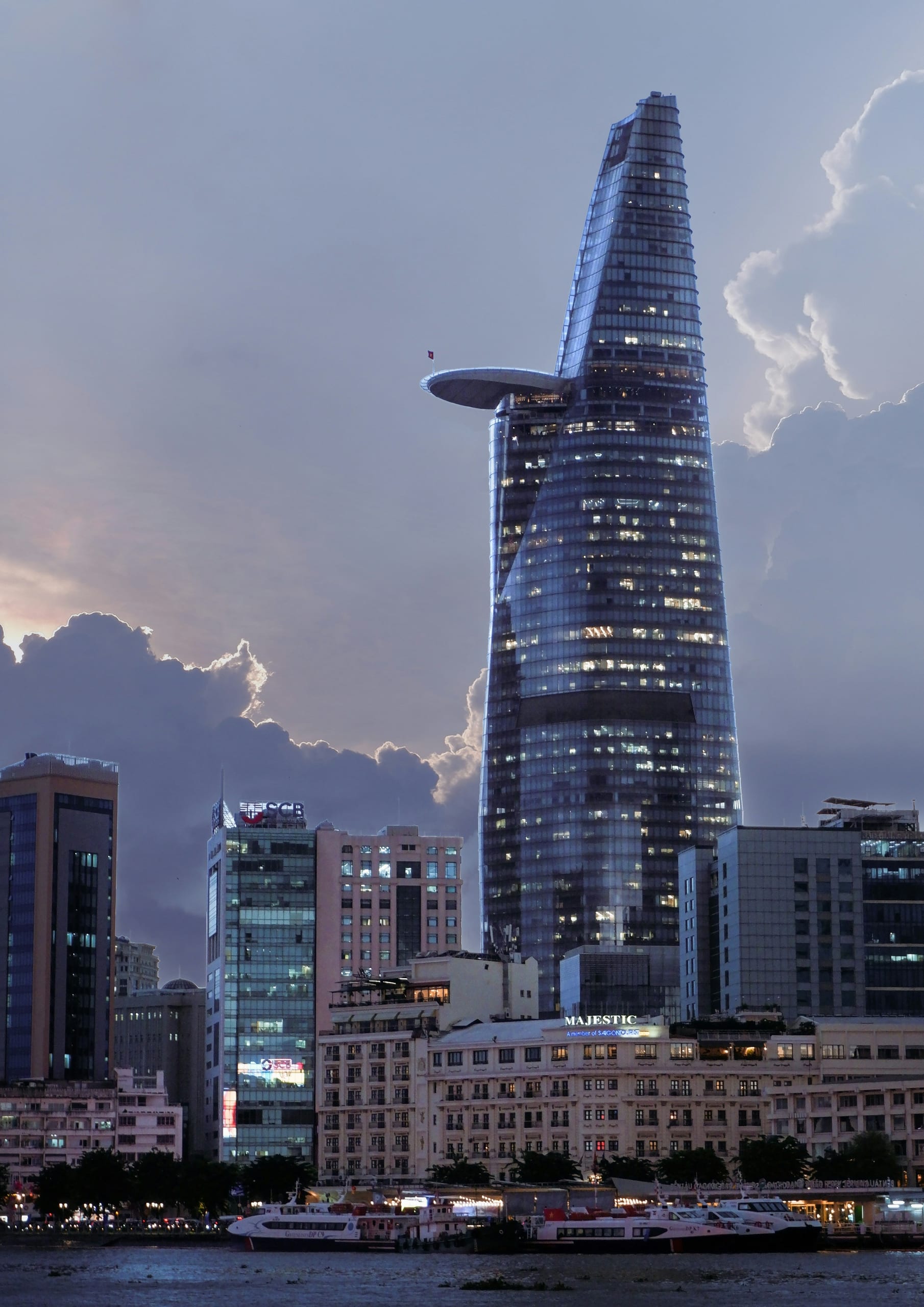
Bitexco Financial Tower. The lotus-shaped skyscraper dominates the skyline. The Saigon Skydeck on the 49th floor costs around 200,000 VND ($8) and gives you the sprawl in every direction — the river, the port, the flat delta disappearing into haze. Go on a clear morning; smog eats the view by afternoon.
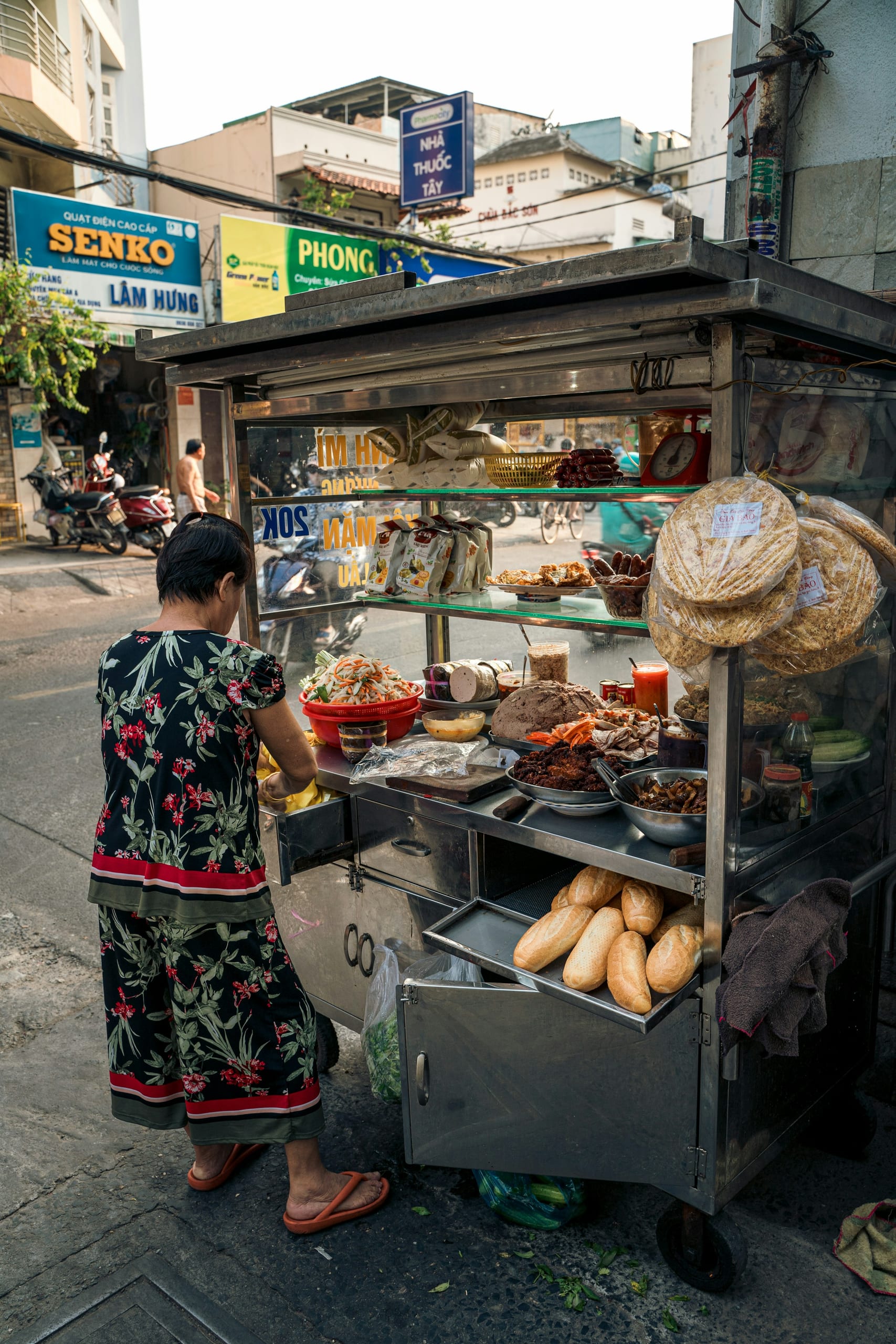
A food tour, or just walk hungry. Saigon is one of the great street-food cities on the planet. Bánh mì from a cart runs 25,000–35,000 VND ($1–1.40). Bún thịt nướng at a shop with plastic tables: 45,000–60,000 VND ($1.80–2.40). My best dinner was cơm tấm — broken rice with grilled pork chop and fish sauce — at a place on Vo Van Tan with no English menu. Point at what the person next to you has. Pay around 50,000 VND ($2).
What I would skip: Cu Chi Tunnels as a half-day bus tour from the city. The standard hostel packages compress four hours of driving into a rushed visit with a firing range gimmick. If war history matters, go independently or spend more time at the War Remnants Museum. Bui Vien, the backpacker bar strip — loud, cheap beer, predatory pricing at some venues. I walked through once at 10 p.m. and left.
When to go, and what it costs
Dry season: December through April. I was there in March — 32°C (90°F), humid, one thunderstorm that flooded a side street to ankle depth in twenty minutes. Wet season: May through November brings heavier rain. Tet (Lunar New Year, usually January or February) shuts many businesses; book ahead or avoid.
Daily costs, mid-range: $35–60 covers a hotel in District 1 or 3, Grab rides, street-food meals, and one paid attraction. My hotel in District 3 cost $38 a night — clean, air-conditioned, breakfast included. District 1 central runs $50–80 for similar quality.
Tan Son Nhat airport is 7 km from District 1. A Grab car costs 80,000–120,000 VND ($3–5). Check current e-visa requirements before booking. Pack light — a folding daypack beats a roller bag on cracked pavements.
The problems
Heat hits hard after 11 a.m. — plan museums and cafes for midday. Motorbike exhaust gets to you after a few days. Unmetered taxis overcharge; use Grab. Shoe-shine "accidents" and the coconut-photo hustle happen in tourist zones; a firm không (no) works. Notre-Dame Cathedral was under scaffolding when I visited; check before you plan around it.
Compared to Chongqing or Shanghai, Saigon is lower-rise and messier. Compared to Kyoto, it is the anti-whisper. If you have already been to Hoi An, Saigon is the country's loud sibling — less pretty, more functional, more honest about being a working city.
Is it worth it?
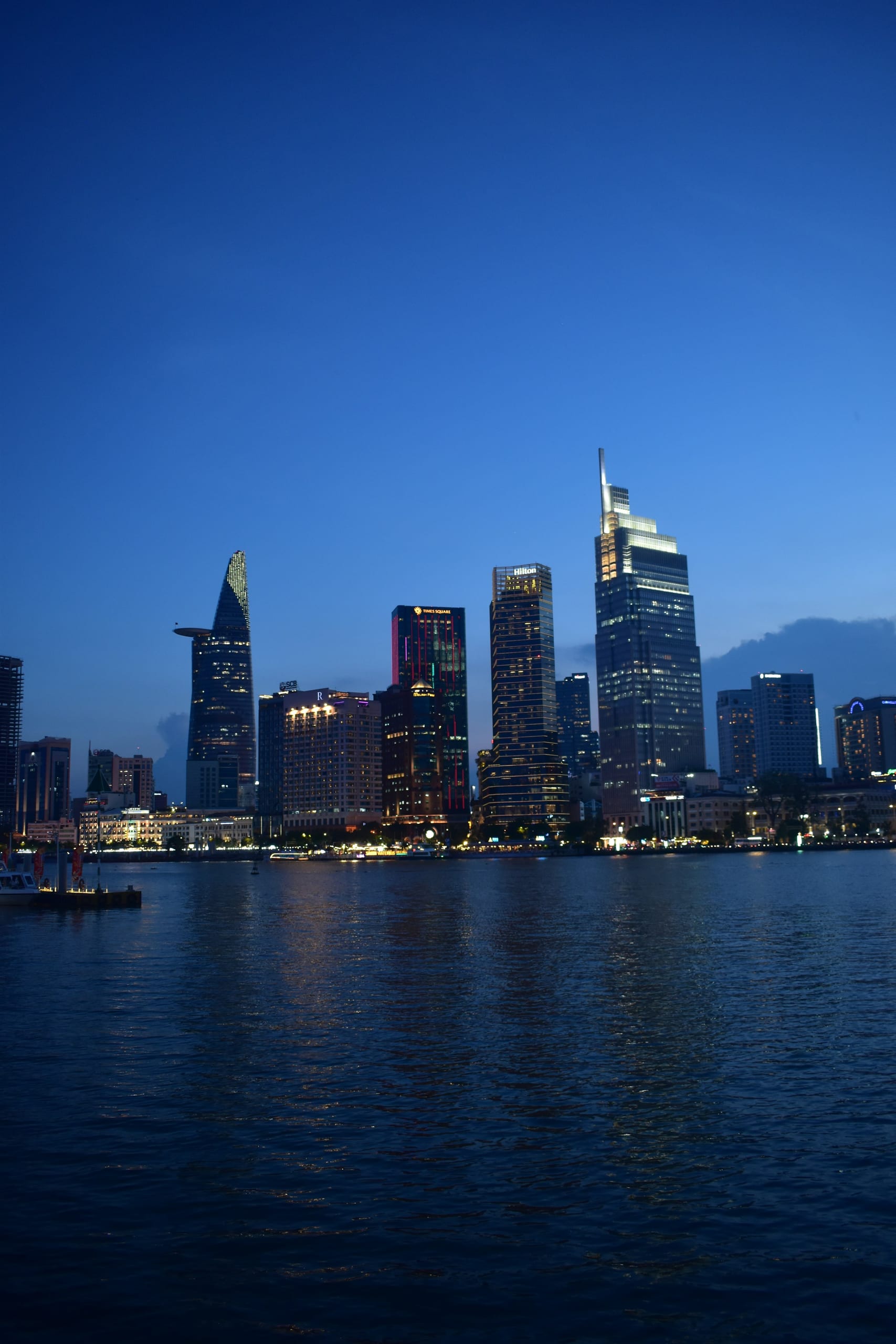
Yes, if you want a city that operates at full volume and feeds you well for pocket change. Saigon is not a landscape destination like the Lofoten Islands or a curated old town like Hoi An. It is a place you walk into and let happen — the coffee, the crossing, the bowl of noodles at a plastic table, the skyline at dusk when the heat finally breaks and the river catches the light.
Go for three full days minimum. Eat street food until you trust it. Cross one impossible intersection. Sit with a phin coffee and watch the scooters.
More cities and regions on the destinations page.