My phone said I was on the 22nd floor. The street outside the window was on the 14th. I had walked down three flights of escalators to get there, and I still wasn't sure which direction was uphill. This is normal in Chongqing, and it is the reason the city stays in your head long after the numbness in your lips wears off.
Chongqing sits in southwest China where the Yangtze and Jialing rivers meet, a port city of roughly 32 million people in its greater metro area that most Western travellers skip in favour of Beijing or Shanghai. That is a mistake if you want urban China without the museum polish: a city built on cliffs, threaded with monorails and cable cars, wrapped in fog for half the year, and organised around a communal meal that involves boiling beef tripe in oil hot enough to qualify as a weapon.
What it actually is
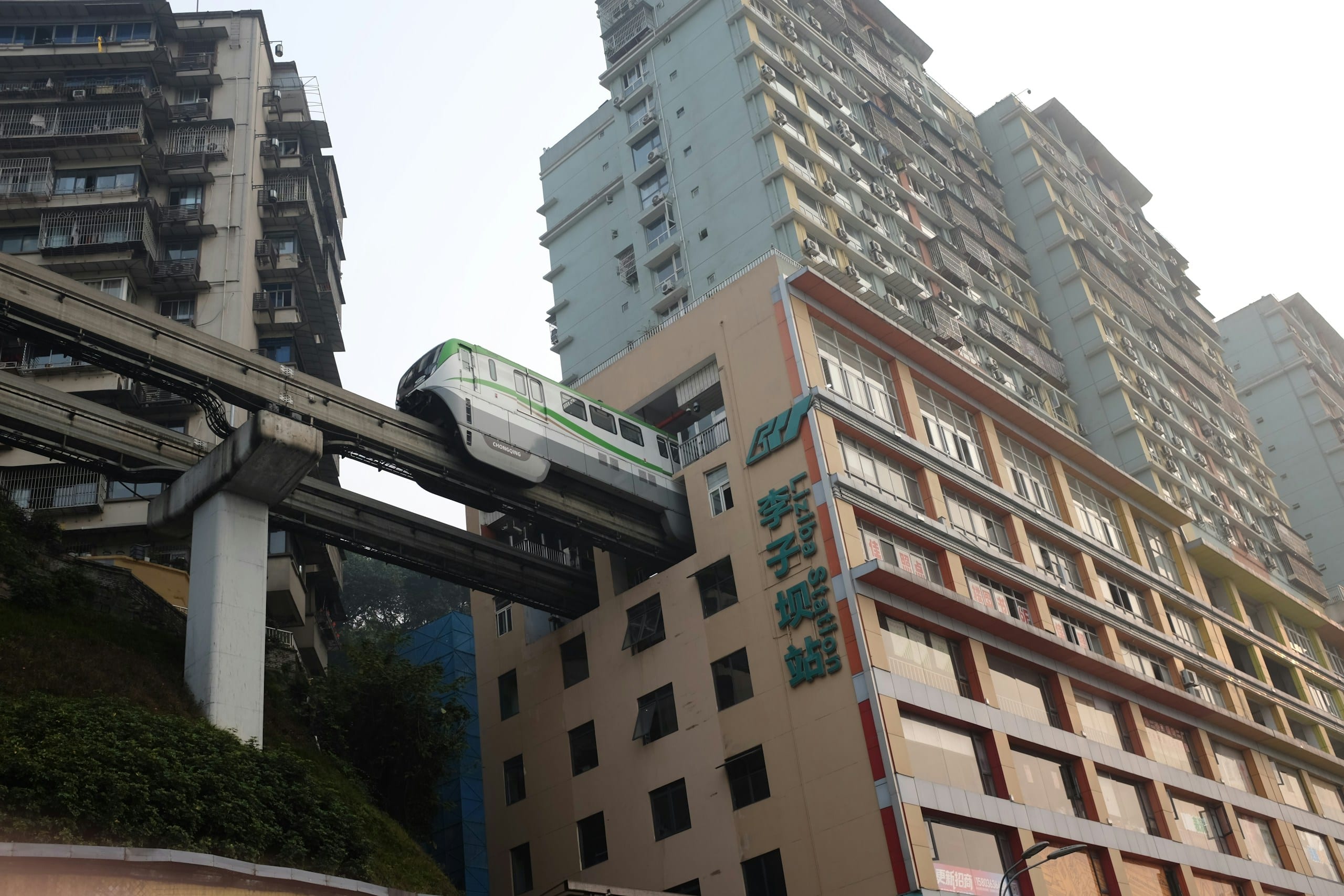
Forget the "8D city" social-media label for a moment. The useful version is simpler: Chongqing has almost no flat ground. Buildings grow out of the hillside at angles that would make a surveyor weep. Roads stack on top of roads. Your hotel lobby might open onto a plaza that is technically someone else's roof. The metro runs through a residential tower at Liziba station because there was nowhere else to put it.
The result is a city that reads wrong on a map and feels right on your feet, if your feet are prepared to climb. Jiefangbei, the central commercial district around the Liberation Monument, is the usual base. From there you can reach Hongya Cave, the Yangtze cableway, and the riverfront without a taxi, though you will use more stairs than any city this size has a right to demand.
The hotpot reckoning
Chongqing hotpot is not Chengdu hotpot with a different postcode. Chengdu's version is excellent and slightly gentler. Chongqing's uses more beef tallow, more dried chilies, and enough Sichuan peppercorn to produce the málà effect: a numbing, tingling sensation that starts on your lips and works inward until you forget what plain water tastes like.
You sit around a shared pot, usually divided into two halves — one incendiary red, one mild — and cook raw ingredients in the broth yourself. Order the split pot (yuanyang) even if you think you handle spice. You don't, not at first. Thin-sliced beef, duck intestine, lotus root, tofu skin, leafy greens. The offal is where locals show you respect; the tripe cooks in seconds and rewards you for not being squeamish.
A proper dinner with beer runs ¥80–150 per person (roughly €10–20). The restaurants packed with locals down side streets near Jiefangbei beat the tourist-facing hotpot rows at Hongya Cave on both price and heat. Napkin packs sometimes appear on the bill for ¥2–3; minor annoyance, not a scam.
The peppercorn doesn't hurt. It buzzes. Your mouth goes fuzzy and you keep eating anyway, which is probably the point.
I ate hotpot three nights running. By the third, I could taste the broth's depth beneath the fire — the tallow, the fermented bean paste, the long simmer — and understood why people here treat it as a social ritual rather than a meal. You sit for hours. The pot never empties. Someone always orders more tripe.
What is worth your time
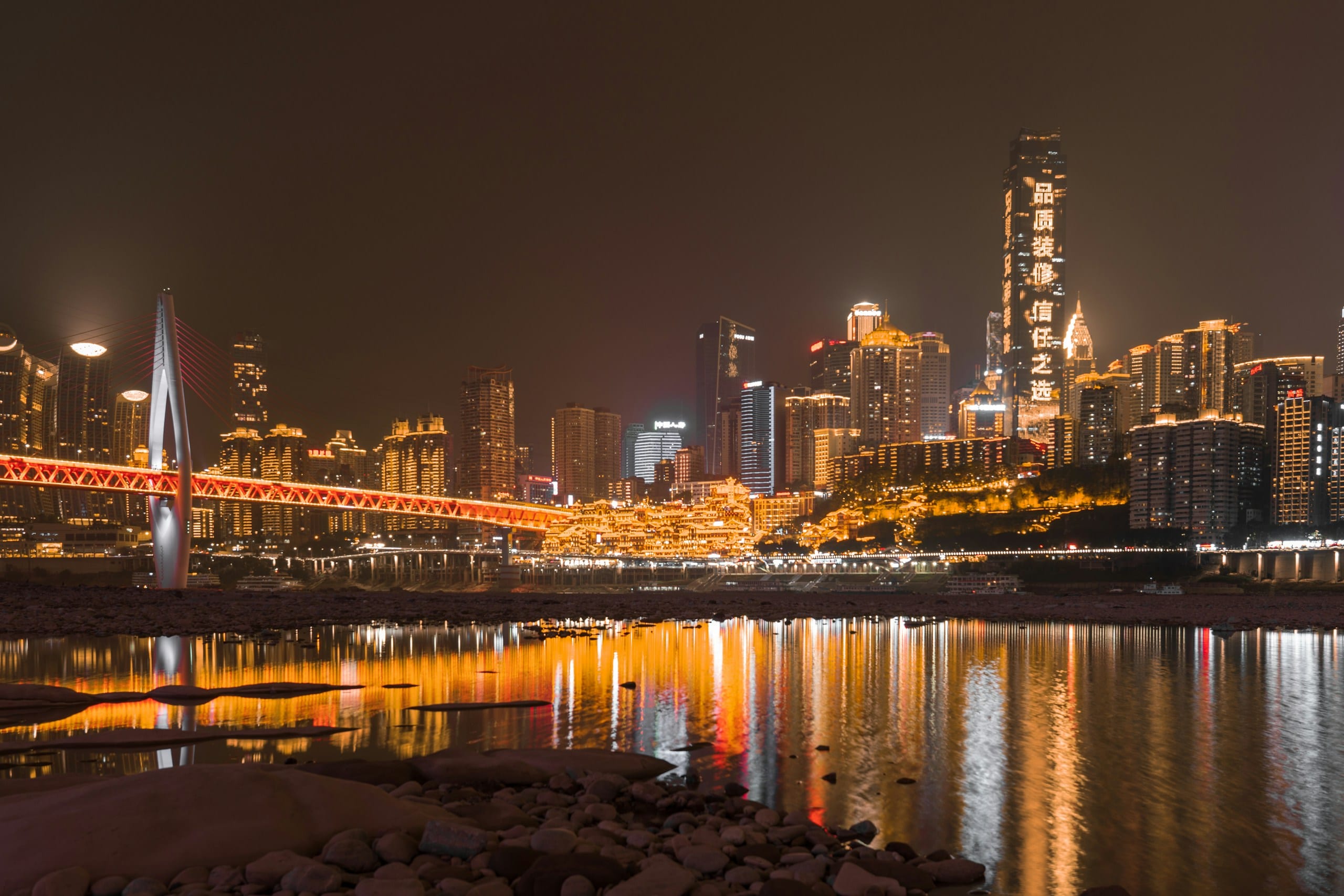
Hongya Cave at dusk, viewed from across the river. The stilt-house complex itself is a mall dressed as old Chongqing — overlit, crowded, full of snack stalls selling the same skewers. Walk through once if you must. The real payoff is the exterior: eleven floors of lit-up facades tumbling down the cliff toward the Jialing, best seen from Qiansimen Bridge or the north-bank promenade after dark. It looks like a set designer's dream of a Chinese river town, and the scale is real even if the shopping isn't.
The Yangtze River Cableway. A rusty-looking aerial tram that crosses the river in about four minutes for around ¥20 one way. Touristy, yes, and the queue at sunset can stretch. Go on a weekday morning or accept the wait for the view: the city from above, two rivers converging, cargo barges below like slow insects. Buy tickets through the official channel; street sellers push overpriced QR codes.
Liziba station and the train-through-building. Line 2 of the monorail passes through floors six to eight of a residential tower. There is a free viewing platform near Exit 2 — you do not need a metro ticket. Trains come every few minutes; the whole spectacle lasts five seconds. It is absurd, genuinely, and worth twenty minutes. I watched three passes, laughed each time, and left.
Nanbin Road along the south bank. A riverside walk with the skyline across the water. Less frantic than Hongya Cave, better for an evening stroll before or after hotpot. In clear weather you see why Chongqing shows up in every list of dramatic city skylines; in fog, which is often, you get something moodier and more honest.
Chaotianmen, where the rivers meet. The old port at the tip of the peninsula. Chaotianmen Square is mostly concrete and crowds, but stand at the water's edge and you see the Yangtze's brown silt meet the greener Jialing in a visible line. This is also where Yangtze River cruises depart for the Three Gorges — a multi-day journey downstream to Yichang through limestone cliffs that belong on a different trip entirely, but start here.
What I would deprioritise: the WFC observation deck on a smoggy day (paying for a grey view), and any "cyberpunk Chongqing" photo tour that herds you to the same overpass at midnight. The city looks extraordinary without a guide; walk until you are lost, then take the metro back.
The Yangtze question
Chongqing works as a two- or three-day city break on its own. It also works as the embarkation point for a Yangtze cruise — typically three nights downstream to Yichang through Qutang, Wu, and Xiling gorges. I did not take the cruise on this trip; I ran out of time and wanted more hotpot. But the logistics are straightforward: book through a reputable operator, keep your passport accessible for boarding at Chaotianmen, and allow a buffer night before sail in case your train from Chengdu runs late.
If mountains rather than rivers call you, the Wulong karst bridges and Dazu rock carvings sit within day-trip range by high-speed rail. I skipped both and do not regret it for a short visit, but they are the obvious extensions.
When to go, and what it costs
Spring (March–May) and autumn (September–November) are the sane windows: warm enough for river walks, not the furnace of July and August when temperatures push past 40°C with humidity that feels personal. Winter is grey and foggy, which suits the city's mood but makes skyline photography a gamble. Rain clears the air; I got two hazy days and one sharp evening when the buildings lit up and the rivers turned black glass.
Daily costs, mid-range: ¥250–500 (€30–65) covers a decent hotel, metro rides, meals, and one paid attraction. Chongqing is cheaper than Shanghai and roughly on par with good-value European cities like the ones I wrote about in Georgia. High-speed trains connect to Chengdu in about an hour, making a combined Sichuan trip easy.
Getting around: the metro is extensive and cheap; allow extra time at deep stations like Hongyancun, where the escalators seem to never end. Taxis and ride-hailing are inexpensive but suffer in rush hour on the stacked expressways. Your legs will do real work. Pack light — a folding daypack beats hauling a roller bag up outdoor staircases that Google Maps does not know exist.
The problems
Air quality varies. English is thin outside hotels and major attractions. The city is loud, smoky, and unapologetic about both. Hongya Cave and the cableway are genuinely crowded on weekends. If you need everything translated, spotless, and orderly, Chongqing will exhaust you.
The spice is not a joke. I watched a confident traveller at the next table tap out after one bite of the red broth and subsist on rice for the rest of the meal. Order the mild half. Keep cold beer within reach.
Is it worth it?
Yes, if urban intensity and food matter more to you than temples and tidy boulevards. Chongqing is not a gentle introduction to China. It is the city where infrastructure looks impossible and works anyway, where dinner hurts a little and you schedule another, where the map lies and the rivers tell the truth.
It has some of the same pleasures as wandering a foreign capital on your own terms — the kind of unhurried city day I wrote about in Porto, except here the city fights back with stairs and peppercorn. Pair it with Kyoto in your mind and you see the range of what "city trip" can mean: one whispers, one shouts.
Go for two full days minimum. Eat hotpot twice. Cross a river by cable car. Stand on a bridge at night and watch the barges. Let your GPS be wrong. More cities and regions on the destinations page.