By the fifth day of a trip you run out of clean socks, and that is how I came to spend one of my favourite days in Porto sitting in a launderette watching my clothes go round. I'd reached the point where the holiday admin can't be put off any longer — the laundry, the haircut you suddenly need, the pharmacy run — and rather than resent the lost sightseeing day, I decided to just let the city be the backdrop to errands. It turned out Porto is extremely good at this. Some places only reveal themselves when you stop trying to see them.
The launderette, and the man with the dog
The launderette was up a steep cobbled street, the kind Porto has in punishing quantity, and it was run, sort of, by an older man who wasn't an employee so much as a regular who had appointed himself to the role. He showed me which machine ate coins and which one ate your soul, in a mix of Portuguese and gesture that left no room for misunderstanding, and then sat back down with a small dog and a newspaper to oversee my progress.
We didn't share a language. We shared forty-five minutes, a bench, and the specific companionable boredom of watching machines do their work. He offered me half a pastel de nata from a paper bag, which I accepted because you do not refuse a man his custard tart lightly. The dog watched the tart leave the bag with open betrayal. It was, genuinely, lovely. I'd been in the city for days, doing the things you're meant to do, and the warmest human moment so far was a stranger and a tart in a launderette.
Down to the river, the long way
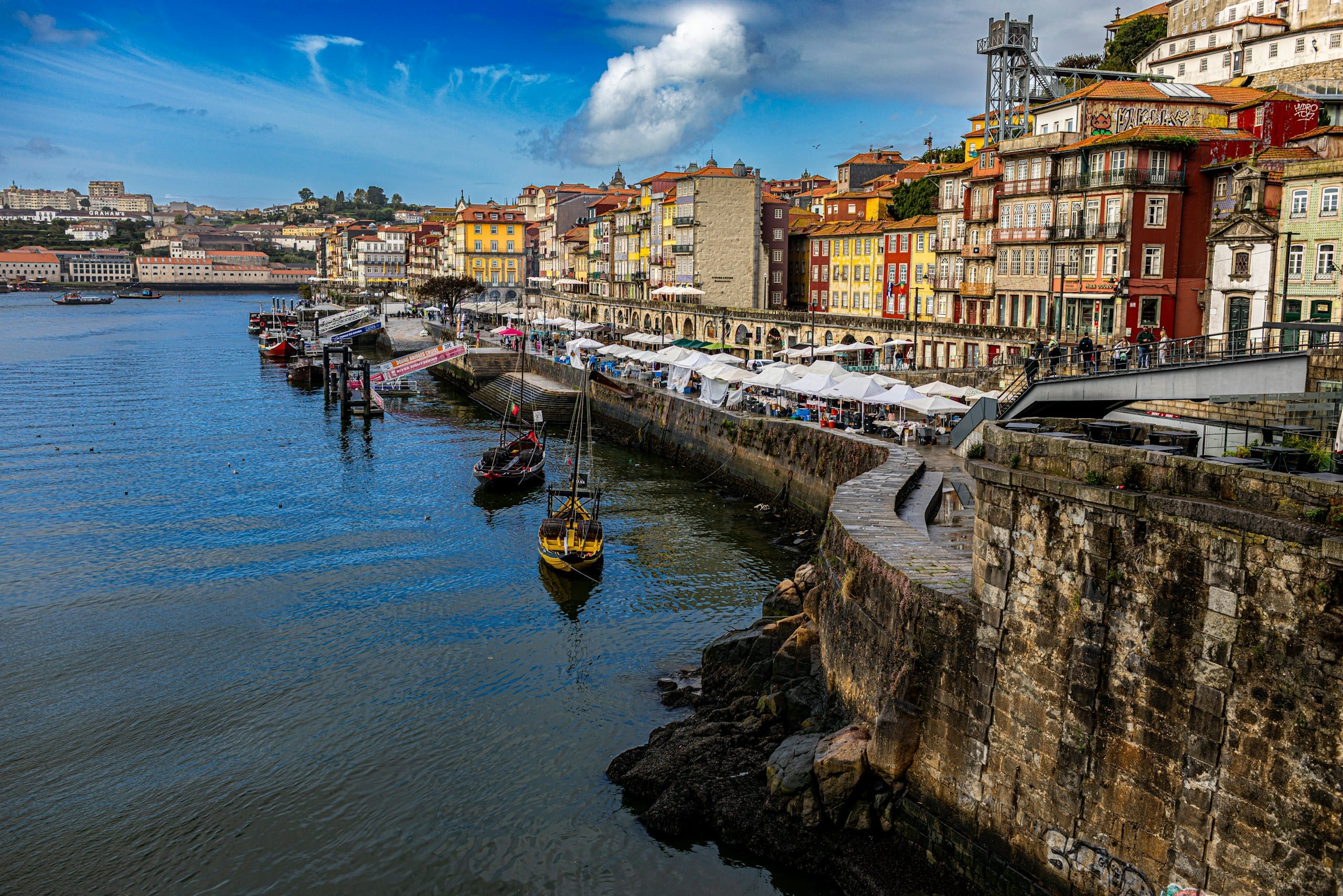
With a rucksack of clean, warm clothes — there is no underrated pleasure quite like this — I went down to the Douro the slow way, which in Porto means surrendering to gravity through a maze of streets that all seem to be falling toward the water. The city is built up the sides of a gorge and stacked on itself, tiled houses in faded blues and yellows and the occasional shocking pink, laundry strung between windows because apparently everyone here has the same problem I did.
I got lost, properly, several times, and stopped minding. I found a tiny café with three tables where the owner made me a coffee and a bifana — a pork sandwich that costs almost nothing and is one of the great cheap sandwiches of Europe — and didn't try to upsell me a single thing. I found the São Bento railway station almost by accident and went in just to stand in the entrance hall, which is lined floor to ceiling with blue-and-white tiles telling the country's history, and which is free, and which most people rush through on the way to a train.
The bench, the bridge, the wine
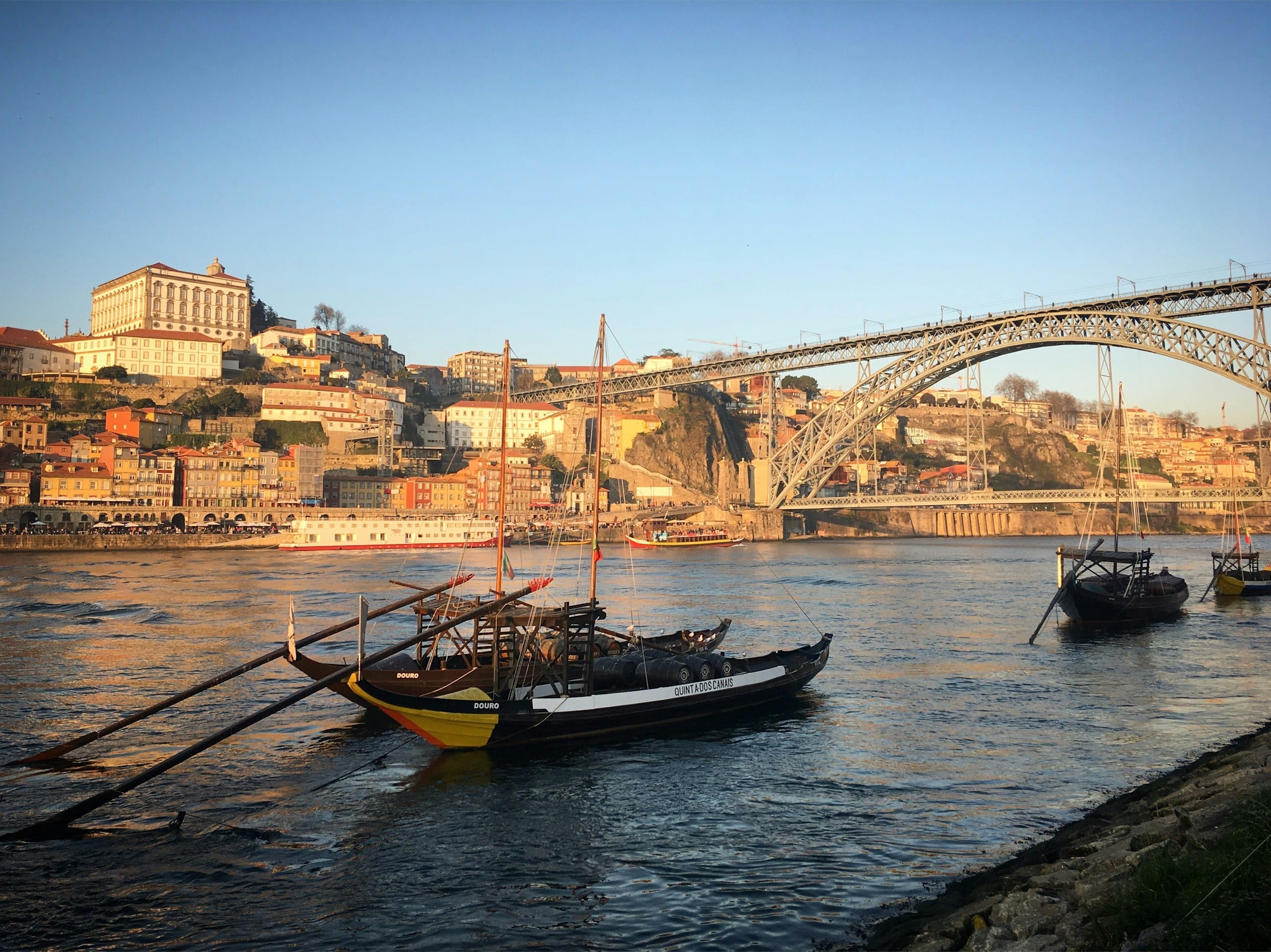
I ended up where everyone ends up, down on the Ribeira waterfront, but late, after the day-trip crowds had thinned. Across the river in Gaia, the old port-wine lodges had their signs lit, and the double-decker iron bridge — the famous one — carried its little trains across the top while people walked the lower deck. I bought a glass of the wine the city is named for from a hole-in-the-wall place, sat on the wall with my feet hanging toward the water and my clean laundry beside me like a small trophy, and watched the light go pink on the far bank.
I didn't take many photos. I didn't see a single thing on anyone's list of things to see in Porto. I'm not sure I could find any of those streets again if you paid me.
It reminded me of a thing I keep relearning and keep forgetting: the cities I end up loving are the ones I've had a genuinely ordinary day in. I had the same experience taking Kyoto slowly, one neighbourhood at a time. The famous sights are usually fine, often crowded, occasionally worth it. The launderette and the bifana and the man with the dog are what I actually carry home.
I was staying in a small private room in a hostel up the hill, and I walked back up to it that night through quiet streets a little drunk on one glass of wine and very pleased with a day in which I had achieved, on paper, nothing at all. More days like this one in the journal.