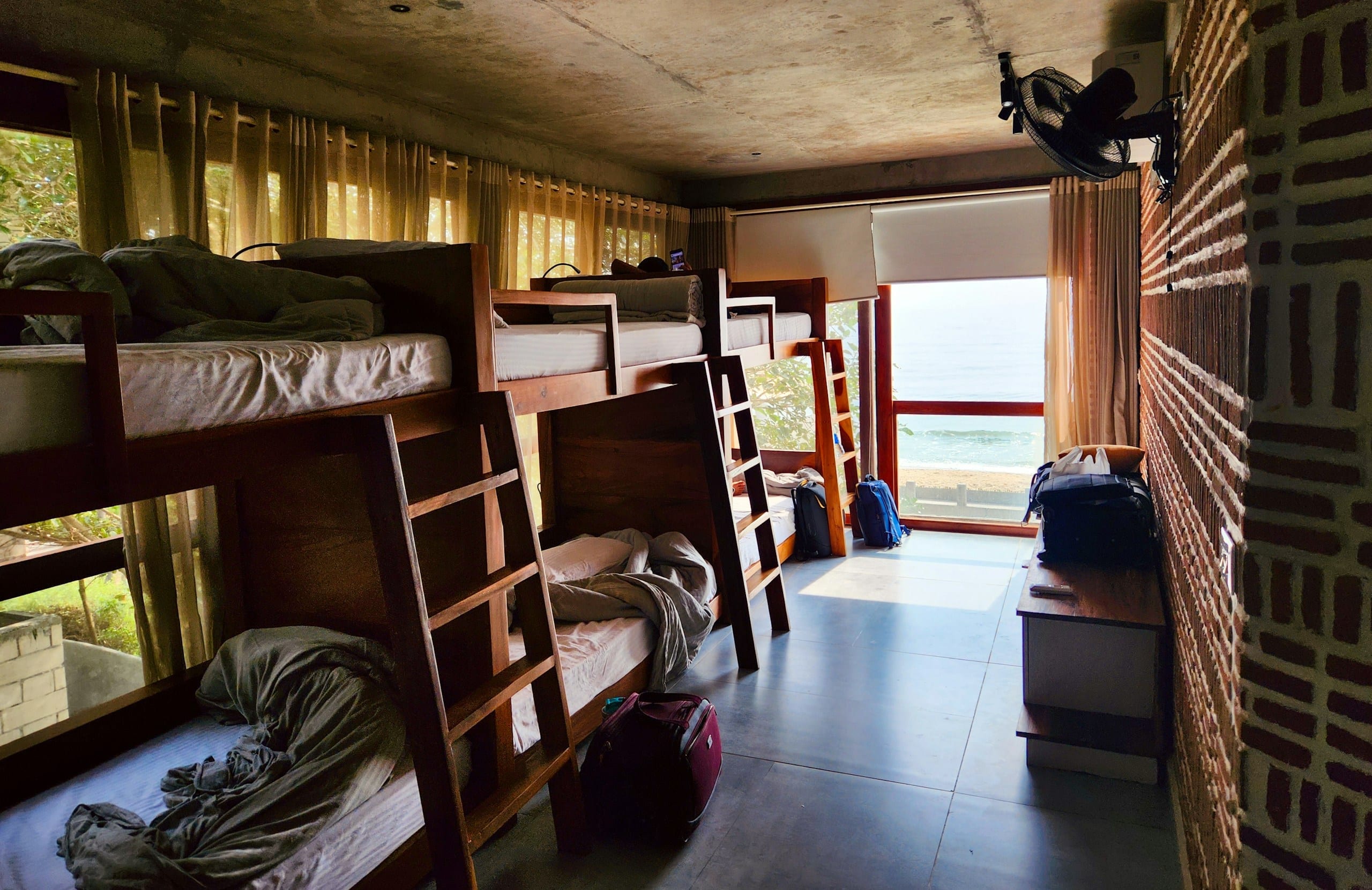
I'm well past the age the stereotype says I should be staying in hostels, and I still book them, and I'm not sorry. The stereotype — eighteen people in a basement room, vomit, someone's 3 a.m. reunion — describes a particular kind of party hostel that I also avoid. The thing it ignores is that a good modern hostel can be the best-value, most sociable, most useful place to stay in a city, especially if you travel alone. You just have to know what you're booking.
The single biggest misconception is that "hostel" means "dorm." It doesn't, not anymore. Most decent hostels now offer private rooms — your own door, often your own bathroom — at a price between a dorm bed and a budget hotel, while keeping the thing that makes hostels worth it: a common space full of other travellers and a staff who actually know the city.
Who it suits
- Solo travellers, above all. A hostel solves the lonely-dinner problem better than anywhere. You'll have company the moment you want it and your own room when you don't.
- Budget-conscious travellers who'd rather spend on the trip than the bed.
- People who want local, current information — hostel staff and fellow guests know which place is good this month, not which one a guidebook liked three years ago.
Who it doesn't suit: anyone who needs total quiet and privacy as non-negotiable, light sleepers in a party town, or travellers who simply want to be left entirely alone (in which case, a quiet guesthouse or farm stay is your friend).
Book the private room, use the common room. That's the whole grown-up hostel strategy.
What it's like
The texture varies wildly, which is exactly why choosing well matters. The good ones have a comfortable common area — a kitchen you can cook in, a bar or café, a terrace — that draws people together without forcing it. There's usually a board of free walking tours, communal dinners, or low-key events. Dorms come in sizes (a 4-bed is a different world from a 12-bed) and increasingly in female-only and mixed options. Private rooms are simple but yours.
A self-catering kitchen is the underrated feature — it saves money and, more than that, cooking alongside strangers is one of the easiest ways to fall into conversation and a shared meal.

How to tell a good one from a bad one
This is the actual skill, and it's all in the reviews if you read them right:
- Read the middling reviews, not the five-stars. The three- and four-star reviews tell the truth — "great staff, thin walls" lets you decide for yourself. (This is the same trick that works for finding good guesthouses.)
- Decide party vs. quiet early. Listings telegraph this. "Famous bar crawl," "liveliest hostel in town" = party. "Boutique," "chilled," "great for digital detox" = calm. Pick deliberately; the mismatch is where misery lives.
- Check the dorm sizes and whether lockers are big and secure. Small dorms and proper lockers are signs of a place that respects its guests.
- Look at the location honestly. Central and a bit noisy, or quiet and a tram ride out? Both are fine if chosen on purpose.
- Watch for "free" things that signal care — free breakfast, free walking tours, free coffee. They cost the hostel little and tell you they're trying.
Price, and where to book
- Dorm bed: roughly €15–40 depending on the city and season.
- Private room: roughly €40–90 — often half what a hotel charges for a worse location.
- Cities like Porto and across the Balkans run cheaper; Western European capitals and Scandinavia run higher.
Book through the big hostel-focused platforms (they have the reviews and the filters) or direct with the hostel, which sometimes undercuts the platforms and is worth a quick check. Book private rooms early in peak season; they're limited and go first.
The human side
This is the whole reason to choose a hostel over a cheap hotel. A good hostel is a social machine: it's engineered, through the common spaces and the events, to make it easy to meet people without the awkwardness of having to engineer it yourself. I've found walking partners, dinner companions, and more than one genuinely useful "you have to go here instead" tip in hostel kitchens and on hostel terraces. Staff at the good ones are travellers themselves and give better recommendations than any concierge.
The flip side: the social energy is the product, so a hostel with the wrong crowd for you is genuinely unpleasant. That's why the choosing matters so much.
The honest downsides
- Noise — the universal hostel complaint. Earplugs, and choosing a calm place, solve most of it.
- Shared facilities in dorms, and variable cleanliness. Read reviews.
- Variable quality, far more than hotels. A chain hotel is predictable; hostels are individuals, for better and worse.
- Security — use the locker, every time, even in nice places.
- The party-hostel trap if you book carelessly. Avoidable, entirely, with ten minutes of reading.
Is it worth it?
For solo and budget travellers, often more than worth it — cheaper, more central, and far more sociable than the equivalent hotel, with up-to-the-minute local knowledge thrown in. Book a private room if you want comfort and quiet, use the common spaces when you want company, read the three-star reviews before you commit, and choose party or calm on purpose rather than by accident. Do that and the teenage-basement stereotype simply won't be your experience.
For a completely different flavour of cheap-and-sociable — rural, slow, and family-run — see staying on a working farm. More rooms worth booking on the stays page.