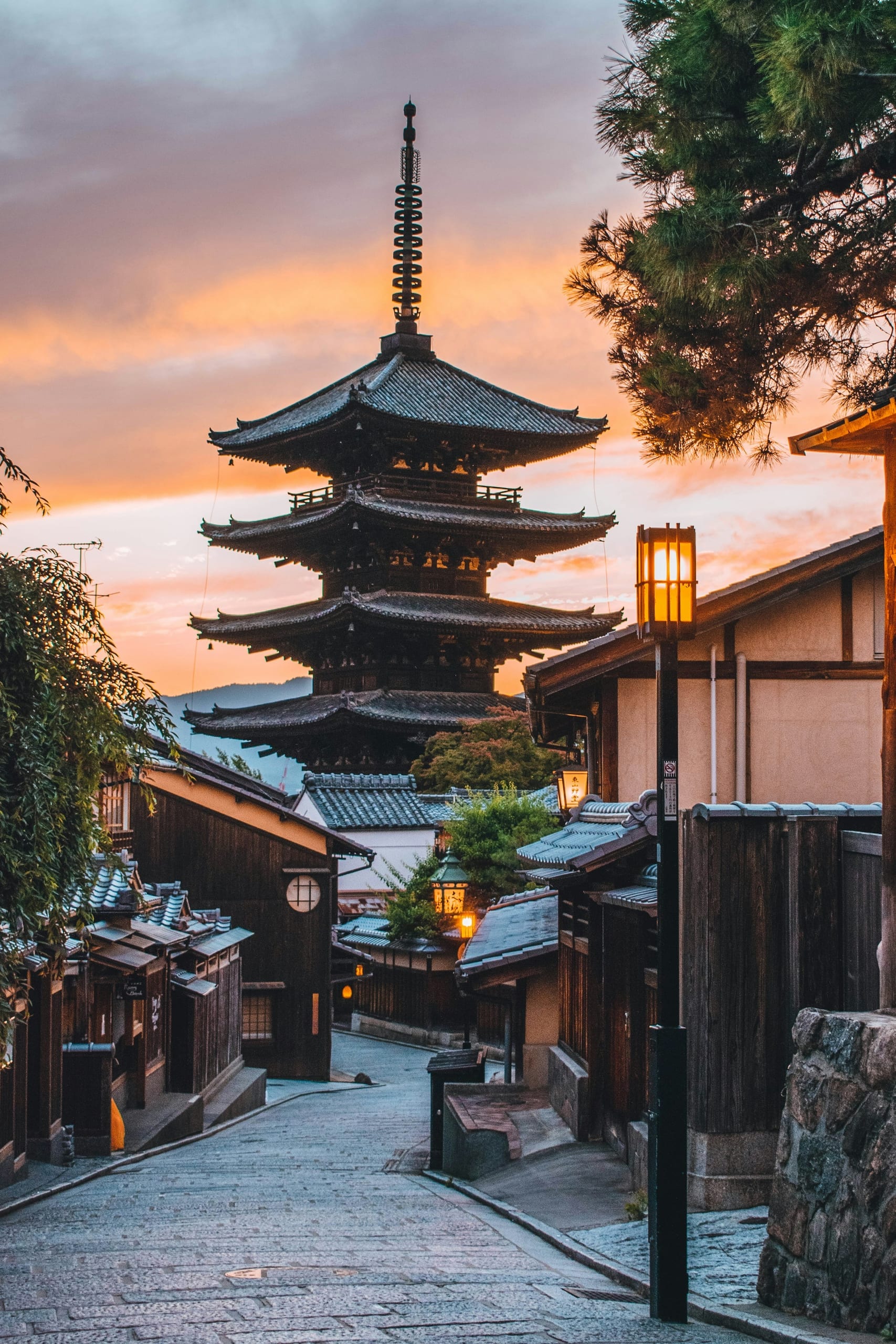
I'll say the unpopular thing first: the famous bamboo grove at Arashiyama is a disappointment. Not because the bamboo isn't tall and strange and green, but because you will be shuffling through it shoulder to shoulder with a few hundred other people, all holding phones up, all trying to get a frame with no one else in it, all failing. I lasted about four minutes. Then I walked ten more, up into the hills behind it, and was completely alone among older, wilder bamboo with a view back over the city. That gap — between the place everyone is told to go and the one nobody bothers with — is the whole skill of visiting Kyoto.
Kyoto was Japan's capital for over a thousand years, and it kept the temples, gardens, and wooden townhouses that Tokyo mostly burned or rebuilt away. There are something like 1,600 Buddhist temples and a few hundred Shinto shrines packed into a flat basin ringed by forested hills. It is, genuinely, one of the great cities to walk in. It is also a victim of its own postcard, and how good your trip is depends almost entirely on when you go and what time you get up.
The timing nobody tells you
The two peak windows are cherry blossom (late March to early April) and autumn colour (mid to late November). They are beautiful and they are madness. Hotel prices double, the temple gardens become a slow-moving crowd, and you spend the day queueing. People plan whole trips around hitting these two weeks, and I understand the pull, but I think it's a mistake for a first visit.
Go in the shoulder instead. May and early June, after the blossom and before the rainy season fully sets in, give you green maples, mild days, and room to breathe. Late September and early October are similarly kind — warm, quiet, the colour not yet turned. You lose the headline photograph. You gain the actual city.
In peak season you photograph Kyoto. In the quiet weeks you get to be in it.
The deeper trick, in any season, is the early morning. The temples open around 6 a.m. and the tour groups don't move until nine or ten. Those few hours are a different city — mist in the gardens, monks sweeping, the gravel raked and untouched.
What's actually worth your time
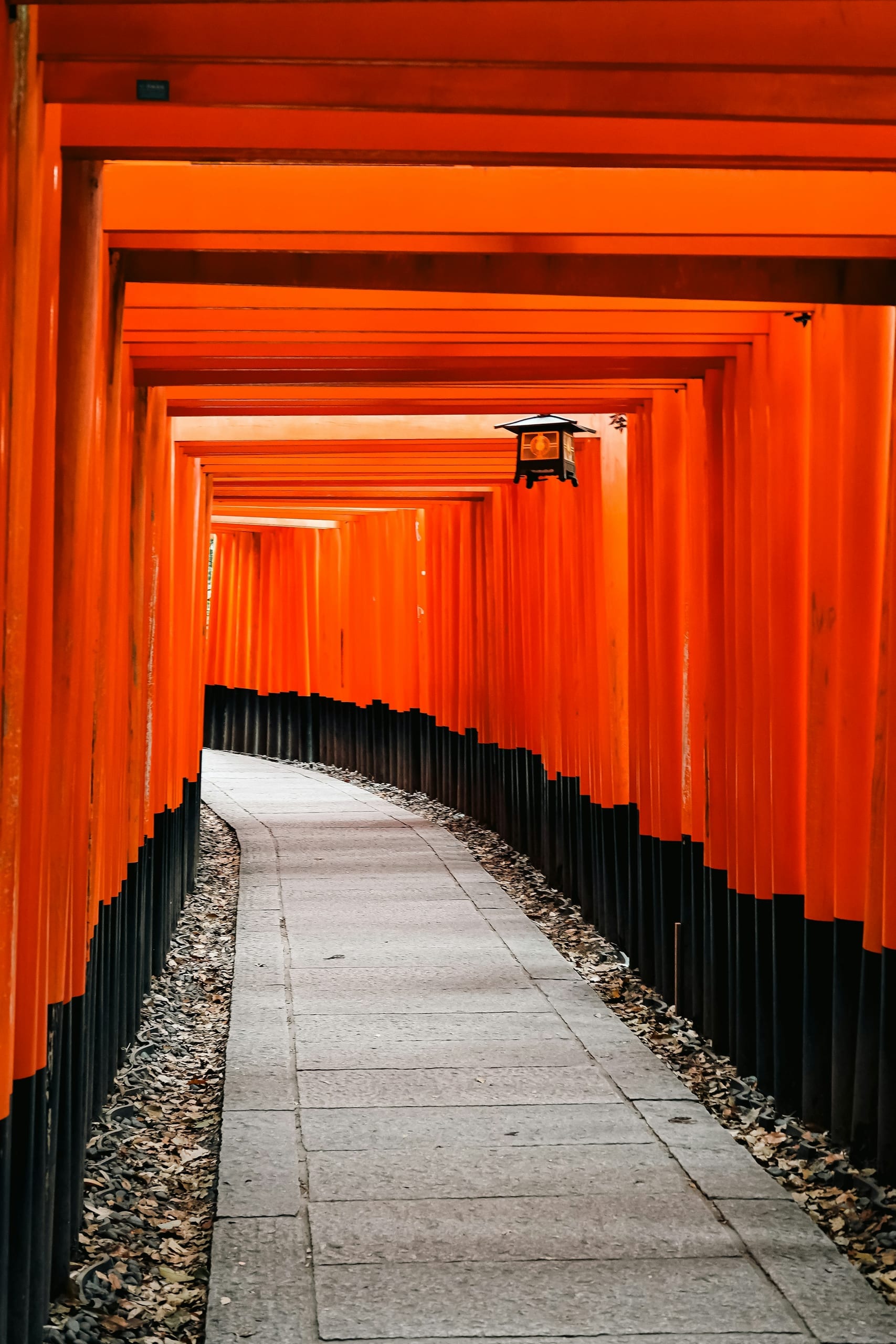
Fushimi Inari at dawn. The shrine with the thousands of vermilion gates, climbing the mountain. By mid-morning it's a crush. At 6:30 it is silent, foggy, and one of the most genuinely moving places I've stood. Go straight there on your first morning before jet lag fixes itself.
The Philosopher's Path, slowly. A canal-side walk between temples in the eastern hills. The point isn't the destination; it's the small temples and quiet cafés you find along it. Bring time, not a checklist.
Nishiki Market, hungry. A narrow covered street of food stalls and pickle shops and knife-makers. It gets busy, but it's where you eat — grilled fish, tofu doughnuts, things you can't identify and should try anyway.
One serious garden. Ryōan-ji's raked-gravel rock garden, or the moss and ponds of somewhere quieter. Sit. Don't photograph it for five minutes. It's designed to be looked at, not collected.
What I'd skip, or at least not prioritise: Kinkaku-ji, the golden pavilion, which is lovely for the eight minutes you're allowed near it and then funnels you out; and Gion at peak hours, where the hunt for a geisha photograph has gotten ugly enough that some streets now ban it. If you want Gion, go at dusk and just walk, quietly, and let it be a neighbourhood rather than a photo op.
Where to stay, and the one splurge
Accommodation runs the full range. Business hotels are clean, tiny, and cheap (€60–100). Machiya — restored wooden townhouses — give you a whole little house with a courtyard for a mid-range price. And then there is the ryokan, the traditional inn, with tatami floors, futon beds, and a multi-course kaiseki dinner brought to your room. A proper ryokan is not cheap (€200–500+) and is worth doing once for the ritual of it.
If you want the temple version of that, some monasteries on nearby Mount Kōya offer shukubo, a stay inside a working monastery, with morning prayers and vegetarian monk's food. It's a short trip from Kyoto and one of the better things I did in Japan.
The practical stuff
- Getting around: buses are the classic Kyoto headache — slow and crowded. The two subway lines and your own feet are better for the centre. Rent a bike if your accommodation offers it; the city is flat and made for it.
- Cost: Kyoto is cheaper than people expect. Temples charge a few euros each; an excellent bowl of noodles is €7. The expensive bits are accommodation and kaiseki, and only if you choose them.
- Cash: still useful at small places, though cards are now widely accepted.
- A day pack earns its keep here — you'll be out from dawn and changing layers as the day warms. A light folding daypack is all you need.
Is it worth it?
Yes, clearly, but on the right terms. Kyoto rewards the early riser and the slow walker and punishes the person trying to see fifteen temples in two days. Treat it like the slow city it deserves to be — one neighbourhood at a time, a long lunch, a garden you sit in rather than tick off — and it's among the finest places I've travelled. Treat it like a list, in peak season, and you'll come home tired and wondering what the fuss was about.
Go in the gap between the famous weeks. Get up before the crowds. The old capital is still in there, and it's still extraordinary; you just have to be a little contrary to find it. More cities and regions on the destinations page.