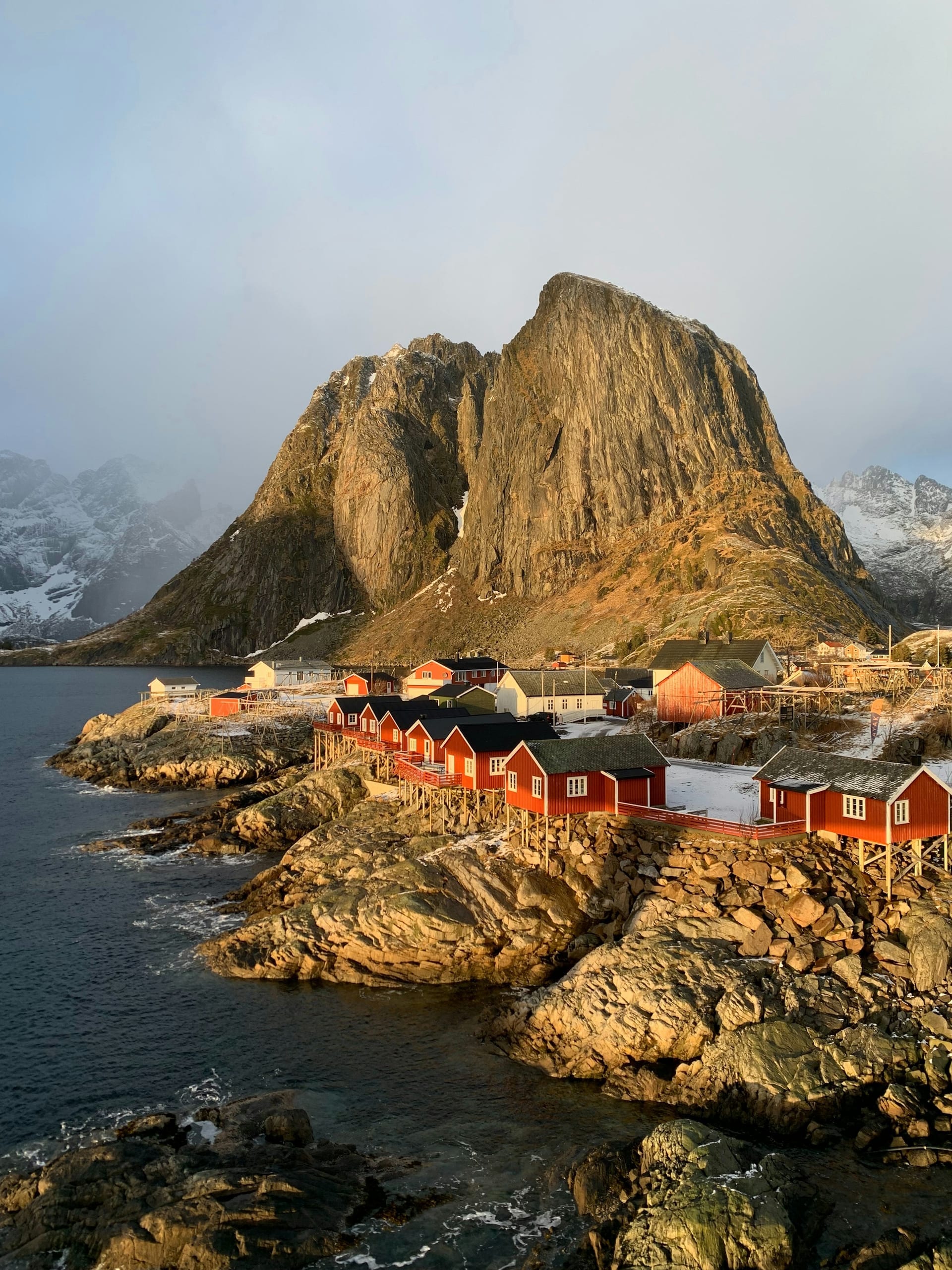
The red fishing cabin you have seen a hundred times — the one with the snow-streaked peak behind it, reflected in still black water — is real, and it is in a village called Reine, and in July there is a line of people waiting to photograph it from the same spot on the road. I know because I joined the line my first morning, felt faintly ridiculous, and spent the rest of the week working out how to have the islands to myself instead.
The answer turned out to be simple. Come in late May or September, not July. Lofoten doesn't change. The crowd does.
Lofoten is an archipelago strung off the coast of northern Norway, well above the Arctic Circle, and its whole appeal is a geographical accident: 1,200-metre granite walls dropping straight into the sea, with tiny fishing settlements tucked into every sheltered cove. The islands are joined by bridges and tunnels, so you can drive the spine of them in a day on the E10 road. Most people do exactly that, in summer, in a campervan, in a hurry. You don't have to.
Why the shoulder season wins
A million visitors a year now come to a place with about 24,000 residents, and they come in a tight summer window. The midnight sun is the draw — from late May to mid-July the sun never sets, which sounds magical and is, for about two nights, until you are lying awake at 1 a.m. wondering why the sky is the colour of a swimming pool.
Here is the trade I'd make. Late May still gives you near-endless light and green hillsides, but the campervan tide hasn't fully arrived. September brings the first real darkness back, which means the northern lights become possible again, and the autumn colour on the lower slopes is genuinely good. Both shoulders are cheaper, calmer, and you can park at a trailhead without circling.
The islands don't change between July and September. The number of people standing on the good rock does.
The cost of going off-peak is weather, and I won't pretend otherwise. Lofoten sits in the path of everything the Norwegian Sea throws at it. I had one day in May where the cloud sat on the water all afternoon and I saw nothing above 200 metres. You accept that here. The mild ocean keeps winters absurdly warm for the latitude, but it also means the forecast is a rumour, not a promise. Bring a proper layering system built around merino wool and stop checking the app.
What I actually did
The famous hike is Reinebringen, a staircase of 1,500-odd Sherpa-built stone steps up to a ridge above Reine, and yes, the view down over the fjord and the islets is as good as the photos. It is also short, steep, and busy. Do it early, before the day-trippers, or late, when the light goes long and gold and most people have gone to dinner.
But the day I remember best wasn't that one. It was a flat, unfashionable walk out to the village of Å — that's the whole name, the last letter of the Norwegian alphabet, at the literal end of the road. There is a stockfish museum, a bakery that has been making cinnamon buns in the same oven since before I was born, and a harbour where cod hang drying on wooden racks in the wind, which is the smell of the entire region and the reason it exists. I ate a bun, watched a man mend a net, and talked to nobody for two hours. It was perfect.
If you want one thing that sorts the casual visitor from the rest, walk to Bunes or Kvalvika beach — white sand and turquoise water that has no business being this far north, reachable only on foot. The walk in keeps the numbers down. Bring water; there's none out there. A packable daypack you can stuff in your luggage is the difference between doing these walks and talking yourself out of them.
Where to sleep, and what it costs
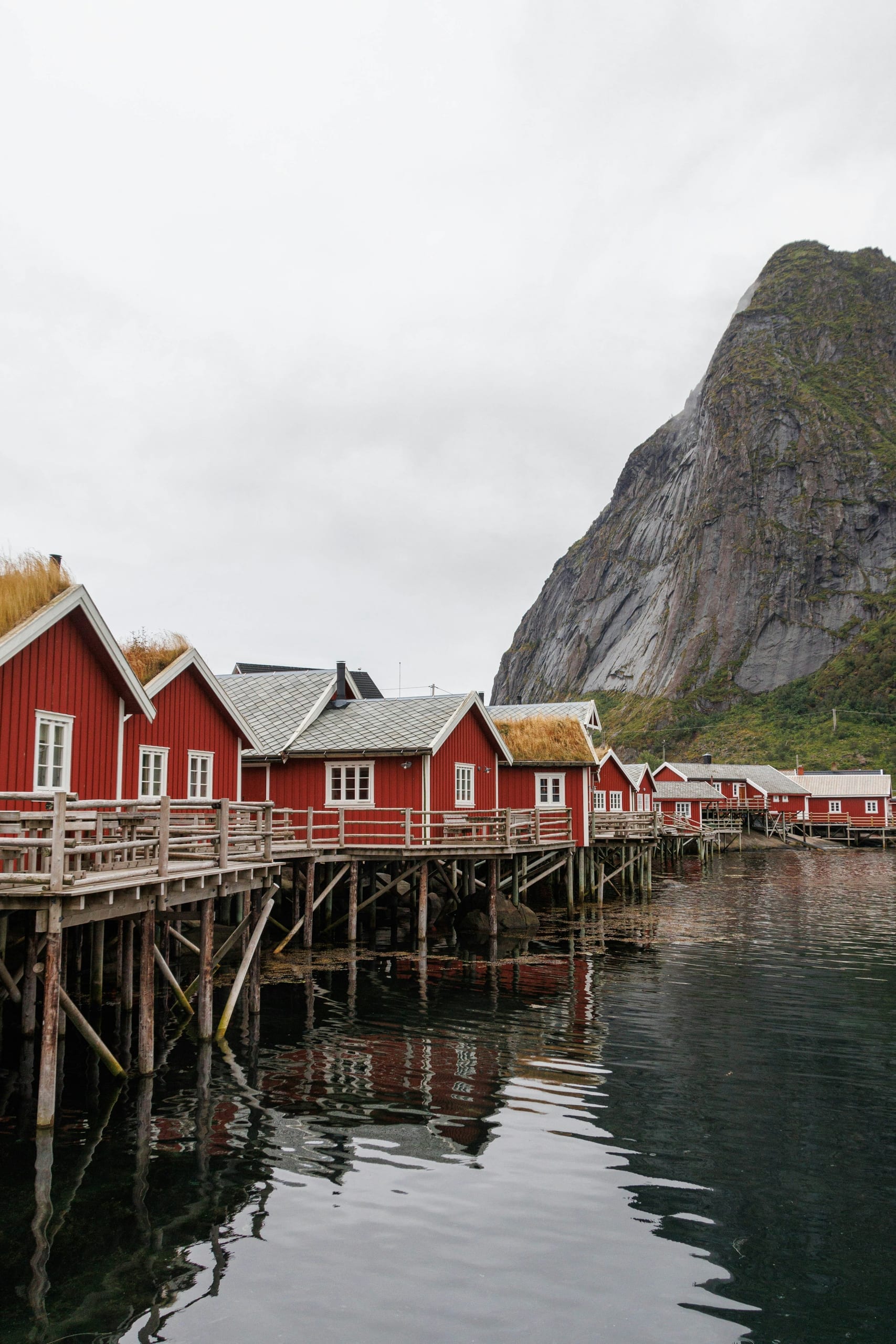
Norway is expensive and Lofoten doesn't discount itself. The classic stay is a rorbu — a converted fishermen's cabin on stilts over the water, often painted that signature ochre red. They run roughly €150–250 a night in season, less in the shoulders, and they are worth it once: you fall asleep to water under the floorboards. Camping is the cheap end and Norway's right-to-roam laws make wild camping legal and easy, if you are equipped for cold nights. There is also a thin scattering of mountain huts and simple lodges for walkers, run on the honour system in the Norwegian way.
Book the rorbuer early for summer — the good ones in Reine and Hamnøy go months ahead. In the shoulder season you have room to be casual about it.
Is it worth it?
Yes, with an asterisk. It is worth it if you come for the walking and the weather-watching and the slow villages, and if you accept that you might lose a day to cloud. It is not worth it if you are chasing a guaranteed sunny screensaver, or if your idea of a good trip is ticking off ten viewpoints between meals — you can do that, plenty do, but the islands give nothing back to the rush.
What I'd skip: the temptation to drive the whole chain in two days. What I'd protect: at least one full day with no plan, somewhere near the end of the road.
If you like the sound of granite and sea but want something warmer and cheaper, the Albanian Alps on the Theth-to-Valbona trail scratch a similar itch for a third of the price. But Lofoten has a particular cold, bright, salt-edged quality I haven't found anywhere else. Go in the quiet months. Stand on the good rock alone. Let it weather you a little.
More places worth the detour over on the destinations page.