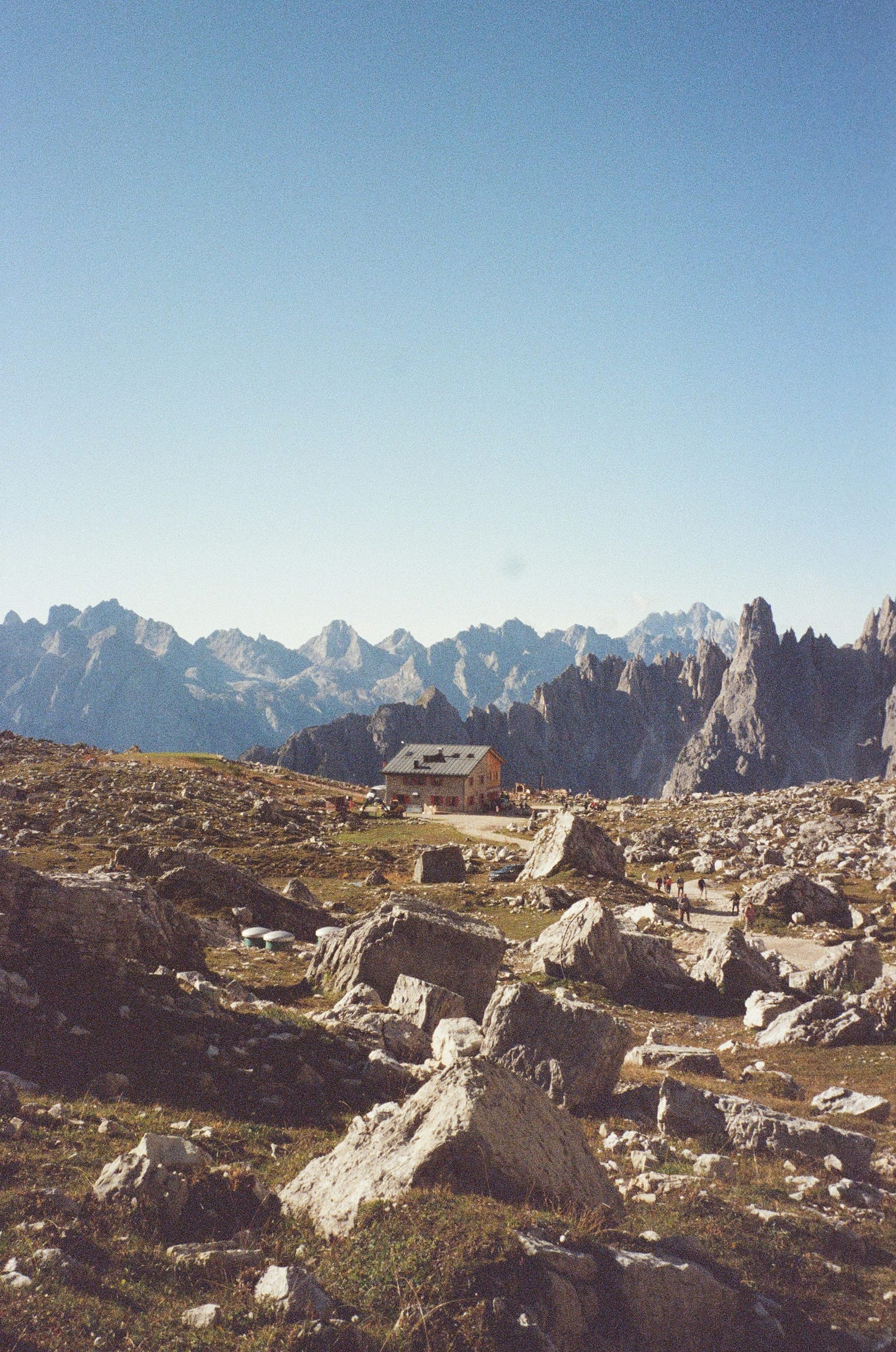
The best dinner I've eaten in years was a bowl of barley soup and a slab of strudel, served at a heavy wooden table, two thousand metres up, to a room full of people who four hours earlier had all been red-faced and silent on the same trail. Nobody had showered. Nobody could, really. We ate like we'd earned it, because we had, and then we climbed into bunks under scratchy blankets while the warden turned the generator off and the mountain went completely dark. I'd take that night over most five-star hotels I've paid for.
Mountain huts — rifugi in Italy, Hütten in the Alps, koče in Slovenia, refuges in France — are one of travel's great open secrets. They're simple lodgings up in the mountains, often reachable only on foot, run to feed and shelter walkers rather than pamper them. If you walk in the hills at all, learning to use them opens up terrain and experiences you simply can't get sleeping in the valley.
What it actually is
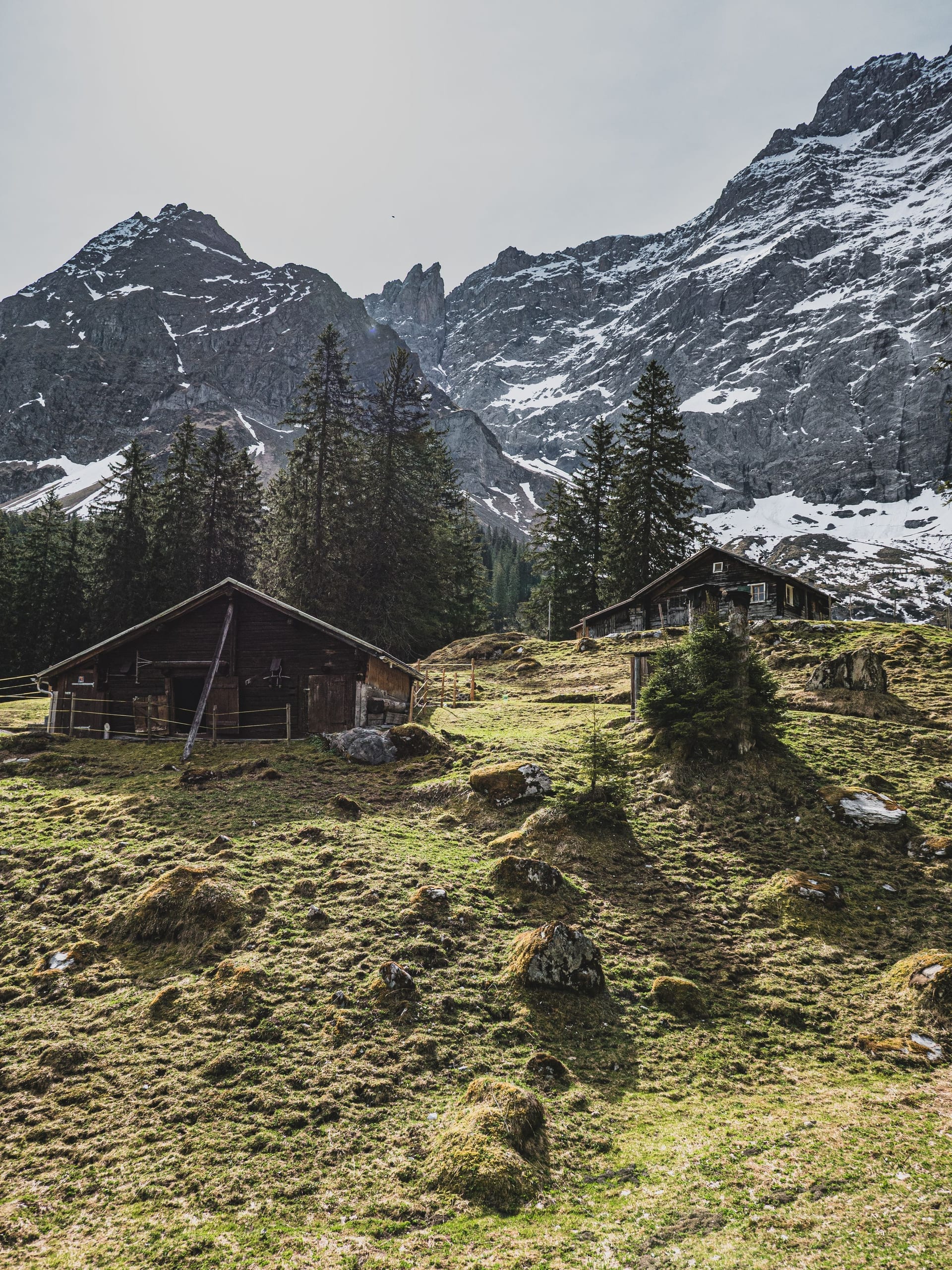
A staffed mountain hut is usually a sturdy building perched somewhere improbable — a saddle, a lakeshore, a ledge below a peak. Inside: a warm common room with long tables, a kitchen putting out hearty food, and sleeping quarters that range from small rooms to a big communal Matratzenlager (mattress dormitory) where you sleep side by side under provided blankets. Most run on half board — a bed, a cooked dinner, and breakfast — which is the sensible way to do it, since carrying your own food up is a fool's errand.
There are also unstaffed huts — bothies, bivacchi, self-service cabins — left open with bunks and sometimes a stove, run on trust and a logbook. Those are a wilder, more self-sufficient experience and a different post.
You don't book a hut for the room. You book it for the location, the dinner, and the strangers you'll never see again.
Who it suits (and who it won't)
This suits anyone who walks and cares more about waking up in the mountains than about a private bathroom. It does not suit light sleepers who can't abide a shared room, anyone who needs a hot shower to function, or travellers who want privacy and quiet at the end of a day. I say that plainly because the single biggest cause of hut disappointment is people arriving expecting a hotel. It is not a hotel. It is a bunk and a meal in an extraordinary place.
What it's like
The rhythm is the same across countries and it's part of the charm. You arrive sweaty in the afternoon, swap your boots for the communal clogs by the door (boots are banished — every hut has a rule about this), claim a bunk, and order a drink. Dinner is early and communal, often a set menu, generous and carb-heavy because everyone's burned a day's energy. Lights and power go off early. People rise with the sun for the next leg.
Facilities are basic by design. Water may be limited; showers are often nonexistent, coin-operated, or cold. Bring a sleeping bag liner (usually required for hygiene), earplugs (non-negotiable — someone always snores like a chainsaw), a head torch for the night-time trip to the loo, and cash, because card machines and mountains don't mix. You'll want trekking poles for the walk in and out and a light pack that carries a day's kit.
Price, and what you get for it
Hut prices are gloriously reasonable for what they are:
- A dormitory bunk: roughly €15–35 a night.
- Half board (bunk, dinner, breakfast): roughly €45–75, depending on country and hut.
- Discounts if you're a member of an alpine club (the Italian CAI, German DAV/Austrian ÖAV, etc.) — and membership is worth it if you'll do several huts, often paying for itself in a few nights plus rescue insurance.
You're paying for the impossibility of the location and the work of hauling supplies up there, not for thread count. Drinks and extras cost more than in the valley for the obvious reason that everything arrived by helicopter or mule.
How and where to book
In popular ranges in summer, booking ahead is essential — the good huts on classic routes fill weeks out, and turning up unannounced on a busy weekend can leave you walking on in the dark. Most huts now take reservations by phone, email, or an online system run by the relevant alpine club. Book the whole chain of huts before a multi-day route, not as you go.
Etiquette: if you book and can't make it, cancel — wardens hold beds and, more seriously, raise the alarm and call mountain rescue for people who don't show. A no-show isn't just rude here; it can launch a search.
What's around
Everything, that's the point. Huts exist to put you within striking distance of summits, passes, and high lakes you couldn't reach on a day trip from the valley. Staying high means you catch alpenglow at dusk and dawn, you start the hard sections fresh and early before the afternoon weather rolls in, and you string together routes hut-to-hut for days without ever descending. Slovenia's Julian Alps and the trekking valleys of Georgia's high Caucasus both run on networks like this.
The human side
The warden makes or breaks a hut. The good ones are gruff, capable, funny, and quietly running a small miracle of logistics in a hard place. The communal dinner does something hotels can't: it throws together people who'd never otherwise meet, all stripped of their usual armour by a shared hard day, and conversation just happens. I've been given route advice, shared bottles, and once been more or less adopted for an evening by a group of Slovenian retirees who found my pace hilarious.
The honest downsides
- No privacy and shared sleeping. Earplugs help; they don't fully solve it.
- Basic facilities — limited water, often no real shower.
- It's first-come for bunk choice even when booked, so arrive at a reasonable hour.
- Weather can trap you — huts are safe places to sit out a storm, but plans change.
Is it worth it?
If you walk in the mountains, yes, without hesitation. A hut night is cheap, sociable, and gets you somewhere genuinely special at exactly the right hours. Go in with the right expectations — bunk and a meal, not a spa — bring earplugs and cash, book ahead, and cancel if your plans change. The barley soup at altitude, the dark coming down over the peaks, the strangers at the table: that's the stuff you remember long after you've forgotten every anonymous hotel room.
For the opposite end of the hospitality spectrum — quiet, solitary, and spiritual rather than communal — see staying in a working monastery. More places to lay your head on the stays page.