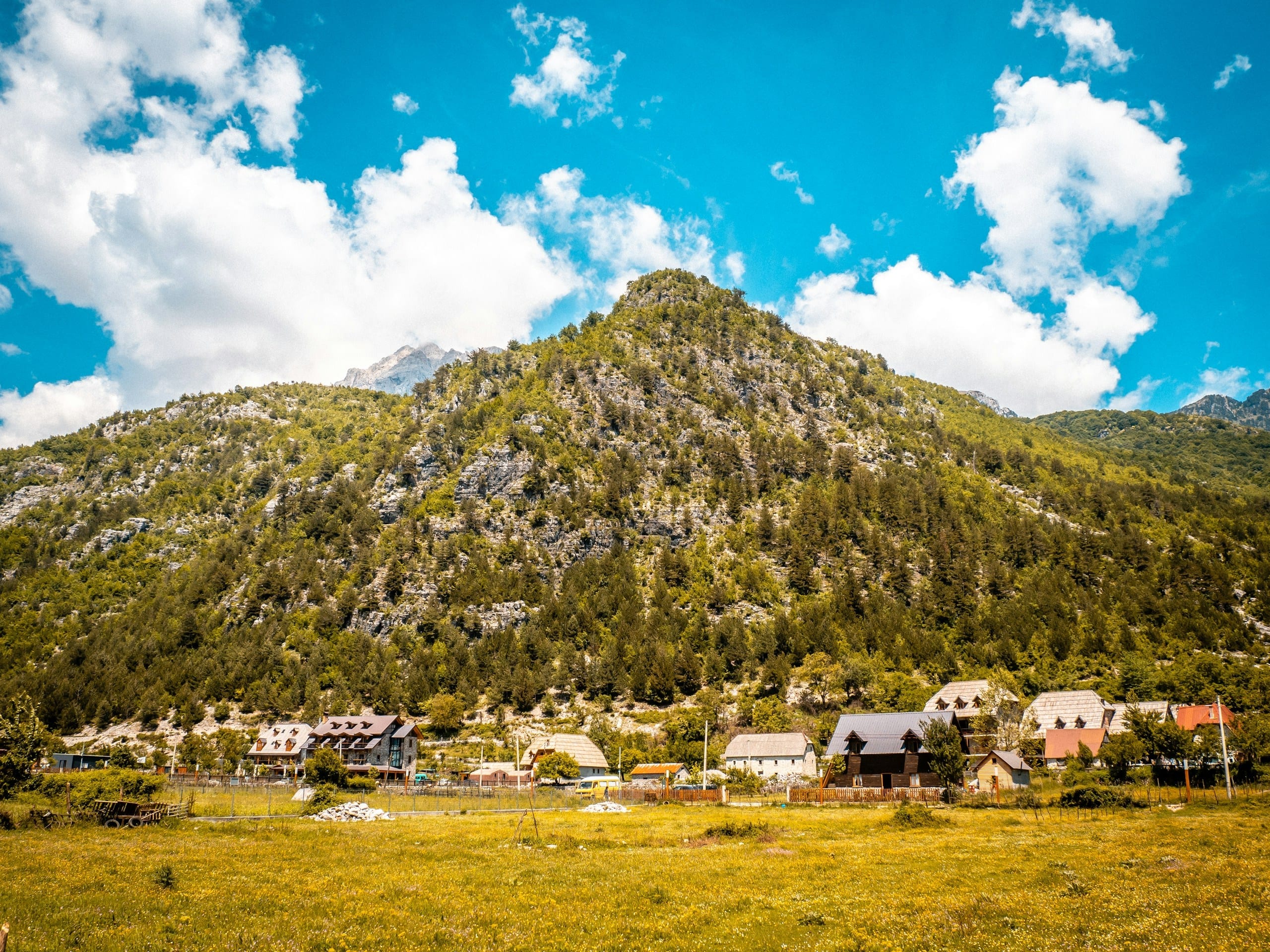
A woman in Theth handed me a jar of honey and a hunk of cornbread as I left her guesthouse at seven in the morning, waved away my attempt to pay extra for it, and pointed at the wall of mountains I was about to walk over as if to say: you'll want this up there. She was right. Six hours later, sitting on the pass with the cornbread and a view down into a valley I couldn't yet name, I understood why people who do this walk tend to bang on about it afterwards. Now I'm one of them.
The Theth-to-Valbona crossing is the signature walk of the Albanian Alps — a range the Albanians call Bjeshkët e Nemuna and the maps usually label, wonderfully, the Accursed Mountains. It links two isolated villages over a high pass in a single day, with a family guesthouse and a hot dinner waiting at each end. It is not a secret anymore. It is still, by some distance, the best value mountain experience in Europe.
What the walk actually is
The classic route runs from Theth up to the Valbonë Pass at around 1,800 metres, then down the far side into the Valbona valley. It's roughly 17 kilometres and most people take six to eight hours with breaks. It is a proper hill walk, not a technical climb — a long, steady haul up through beech forest and meadow to the pass, then a knee-testing descent. You don't need ropes or nerve. You do need to be reasonably fit and you do need decent footwear and a pair of trekking poles for the descent, which is loose and long.
Most people walk Theth to Valbona, but it goes fine the other way too. Either way, you book a bed at both ends, walk between them with a day pack, and have your main luggage shuttled around by road if you want (the guesthouses arrange it).
The Alps charge you a fortune to gatekeep scenery like this. Here it costs about thirty euros, dinner included, and someone hands you honey on the way out.
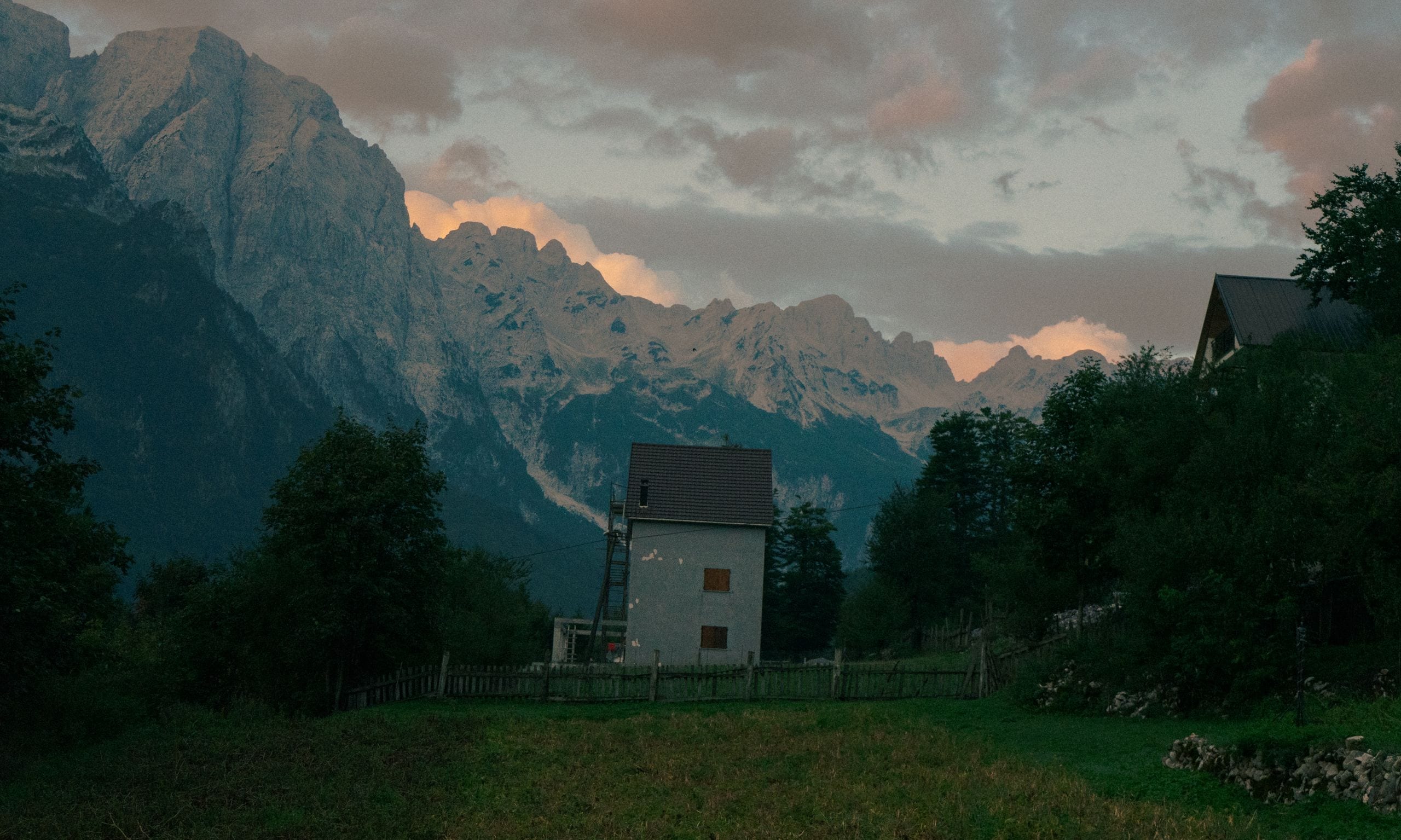
Getting in is part of the adventure
There is no quick way into these mountains, which is the point. The memorable route in is the Koman Lake ferry — a three-hour boat through a flooded gorge so narrow and steep it feels like a fjord that wandered into the Balkans. You take a furgon (minibus) to the ferry, the ferry up the lake, and another furgon up the rough road to Valbona or over to Theth. None of it is luxurious; all of it is part of the story. Build in buffer time, because schedules here are more of a suggestion than a timetable.
A quieter, increasingly popular gateway is the village of Theth itself, now reachable by a paved road that's cut the journey from a brutal four-wheel-drive ordeal to a manageable couple of hours from Shkodër.
Beyond the big walk
Give the area more than just the crossing if you can.
- The Blue Eye of Theth — a vivid blue spring pool a couple of hours' walk up the valley, cold enough to make swimming a brief, shrieking affair.
- Grunas waterfall, a short walk from Theth village.
- The lock-in tower in Theth — a stone kulla where men once sheltered during blood feuds governed by the Kanun, the old Albanian code of honour. It's a sobering reminder that this hospitality you're enjoying sits on top of a hard, complicated history.
Where you sleep and what it costs
This is the part that surprises people. You stay in family-run guesthouses, almost always on a half-board basis: a bed, a big home-cooked dinner, and breakfast, for somewhere around €25–40 per person. The food is mountain food — fërgesë, fresh cheese, vegetables from the garden, raki pressed on you whether you want it or not. It's the kind of hospitality-first stay that ruins anonymous hotels for you.
Book ahead in July and August — the good guesthouses fill up, and these are small villages with limited beds. Bring enough cash; ATMs do not exist up here and cards are useless.
When to go
The season is short: roughly mid-June to late September. Before that, snow lingers on the pass and makes the crossing dangerous; after, the guesthouses start closing and the weather turns. July and August are warmest and busiest. June and September are my pick — fewer people, wildflowers or autumn colour, and cooler walking.
What to bring
- Layers built around merino so you can walk all day and not stink the guesthouse out.
- A light pack you can carry over the pass.
- Water and a way to refill — the streams are mostly clean but a small filter buys peace of mind.
- Cash, a paper map or offline maps, and lower expectations about phone signal.
Is it worth it?
Yes, emphatically, with one honest caveat: the secret is out, and high summer on the main trail now has a steady stream of walkers. It is not solitude. But it is still wild, still cheap, still run by the families who live there rather than a tourism machine, and the landscape genuinely rivals ranges that cost five times as much. Go in June or September, walk slowly, talk to the people putting you up, and don't refuse the raki.
If you liked the sound of this and want the cold, salt-and-granite version, the Lofoten islands in Norway deliver a similar feeling at the opposite end of Europe and the opposite end of the price list. More walks and places on the destinations page.