The flight landed at 9:40 a.m. My original plan was brutal and efficient: Oslo Gardermoen to the train, Oslo S to Bergen by evening, fjords by morning. I'd done the math. It worked on paper.
Then I looked at the return ticket and realized I was about to spend eight hours on a train to avoid a city I'd never actually entered. I canceled the Bergen leg, booked three nights near Grünerløkka, and told myself I'd catch the west coast another year.
That was the right call. Oslo is not Bergen with worse weather and better museums — though the museums are genuinely good. It's a different animal: a capital that spent the last twenty years arguing with its own waterfront, a city where the fjord is a commute route rather than a postcard, and a place that charges Scandinavian prices without always delivering Scandinavian charm on the first afternoon. Give it time. It pays you back in odd, specific ways.
What Oslo actually is
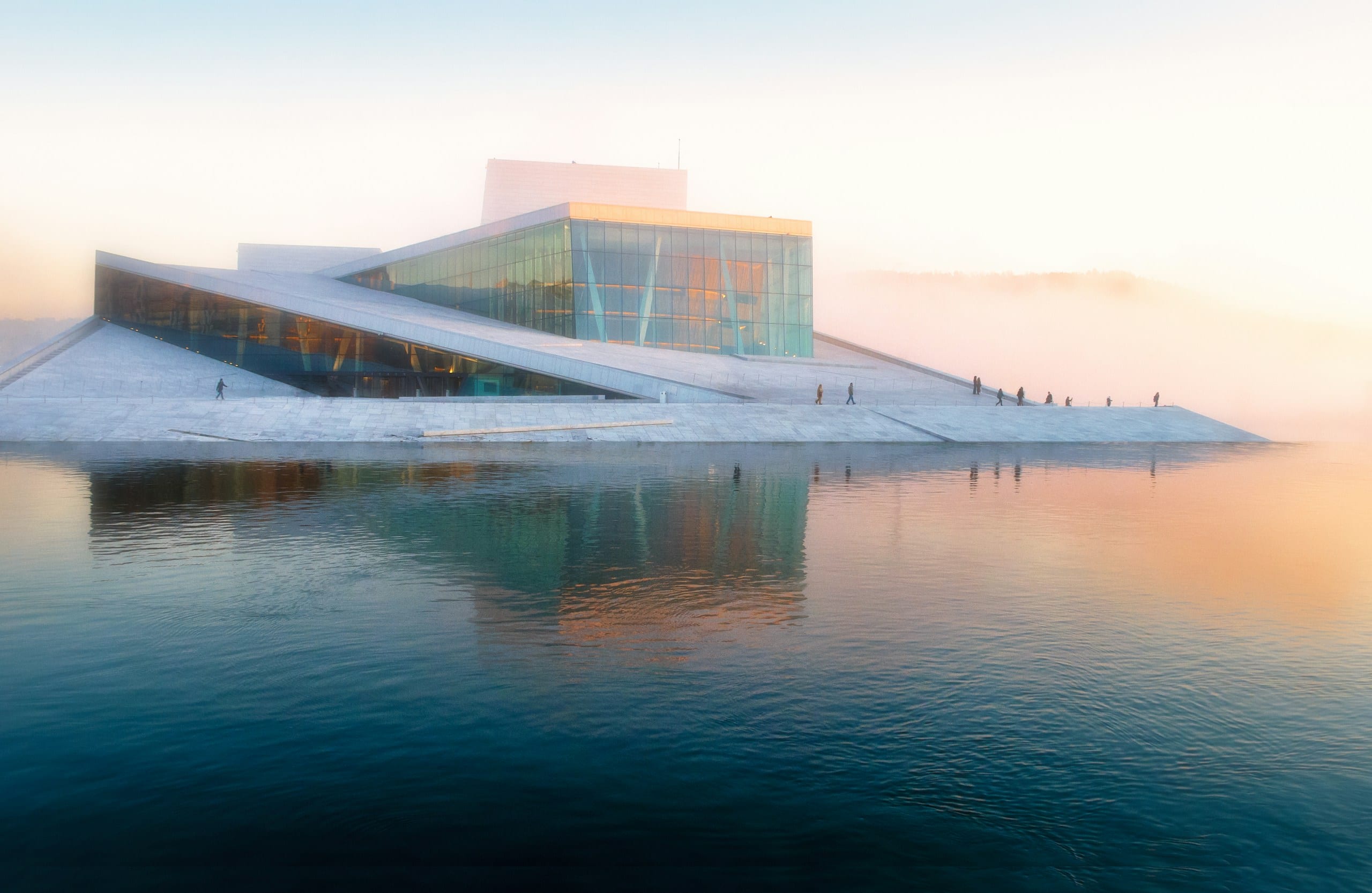
Picture a city of 700,000 people pressed against the inner Oslofjord, with forests starting where the tram lines end. The centre is compact enough to walk; the suburbs climb hills in every direction. Norway's government lives here, half the country's population lives within a few hours' drive, and the oil money shows up in clean buses, heated sidewalks, and an opera house that looks like a glacier calving into the harbour.
It does not look like the Norway of Instagram. You will not get Bryggen's leaning gables or Lofoten's granite spires without leaving town. What you get instead is a working northern capital: cyclists in rain pants, office workers eating open sandwiches at 11 a.m., and a waterfront that locals use for jogging rather than posing.
Oslo rewards the traveler who stops treating it as a transfer point and starts treating it as a place people live.
I arrived in late September. The light was already short. The air smelled like wet leaves and diesel from the ferries. A merino base layer under a shell jacket was the uniform for the whole trip. Oslo is not as wet as Bergen — nothing in Norway is as wet as Bergen — but "drier" still means pack rain gear and stop complaining.
The Opera House and the harbour
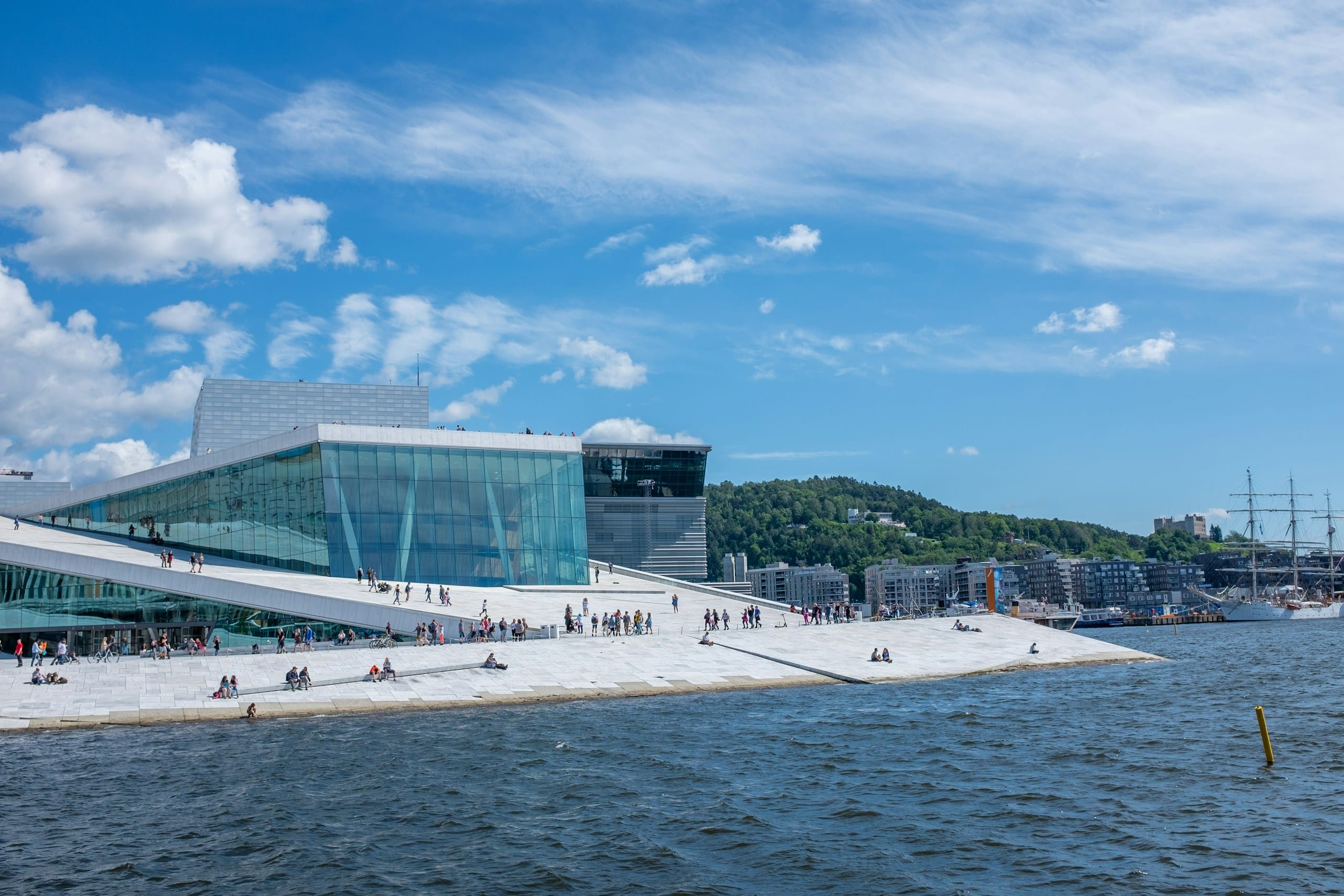
Everyone photographs the Oslo Opera House from the water. Fair. Snøhetta's building really does look like you could ski off it into the fjord, and on a grey day the white marble turns the colour of old teeth in a way that is somehow flattering.
The move is to walk on the roof. It's allowed. It's free. You climb the angled slabs from the harbour side, pass tourists taking the same photo from slightly different angles, and end up on a platform where the city spreads south and the water goes north toward the islands. I went at 7 a.m. on my second morning. A woman was doing yoga on the marble. Two runners passed me without eye contact. The Hurtigruten coastal ferry was loading trucks below. That is Oslo at its best: grand architecture used for ordinary life.
Skip the expensive harbour restaurants at lunch unless you have a reason. Eat a $14 shrimp sandwich from the Torvehallerne market hall ten minutes inland, then walk back to the water when the cruise crowds thin out. The harbour is at its best after 6 p.m., when the day-trippers board buses and the light turns the glass facades of Barcode — yes, that's what they call the row of high-rises — into something less corporate and more like a stack of illuminated filing cabinets. I mean that as a compliment. Barely.
Munch, Vikings, and the museum problem
Oslo's museum cluster used to be scattered and partially closed for renovation. The Munch Museum (MUNCH) opened its new waterfront building in 2021, and it's the reason many art-minded travelers should come here instead of ticking Bergen off a list. Thirteen floors. Eleven versions of The Scream — more than you'd think you need until you stand in front of one and realize the figure isn't screaming at you but blocking out a sound the world won't stop making.
Admission runs about $17 for adults. Budget two hours minimum; I stayed three and skipped the gift shop entirely, which in Norway counts as fiscal discipline. The building itself is controversial — locals compare it to a stacked storage unit — but the collection justifies the argument. If you've only seen Munch on postcards, the scale of the work hits differently.
The Viking Ship Museum on Bygdøy has been in a long renovation cycle; check what's actually open before you ferry over. When it is open, the carved ships are worth the trip — 1,100-year-old oak that looks too delicate to have crossed the North Sea. The Fram Museum next door tells the polar exploration story with the actual ship Fridtjof Nansen sailed frozen into the ice. It's the kind of old-school national museum Norway does well: earnest, detailed, not embarrassed about heroism.
I skipped the Holmenkollen ski jump on this trip. I've seen it before. If you want a view and don't mind a metro ride, it's fine. If you only have three days, prioritize the waterfront and Frogner.
Frogner Park and the angry boy
Vigeland Sculpture Park in Frogner is free, open 24 hours, and full of 212 bronze and granite figures by Gustav Vigeland — humans in every configuration of birth, coupling, aging, and death. Tourists call it "Vigeland Park." Locals call it Frognerparken and use it for Sunday walks with dogs.
I went on a Tuesday morning in drizzle. Joggers passed the Monolith — a 56-foot column of intertwined bodies that took three stonemasons fourteen years to carve. Parents pushed strollers past the bronze bridge figures. A tour group clustered around Sinnataggen, the angry toddler statue that has become Oslo's accidental mascot. He looks like every two-year-old who has ever been told no in a supermarket.
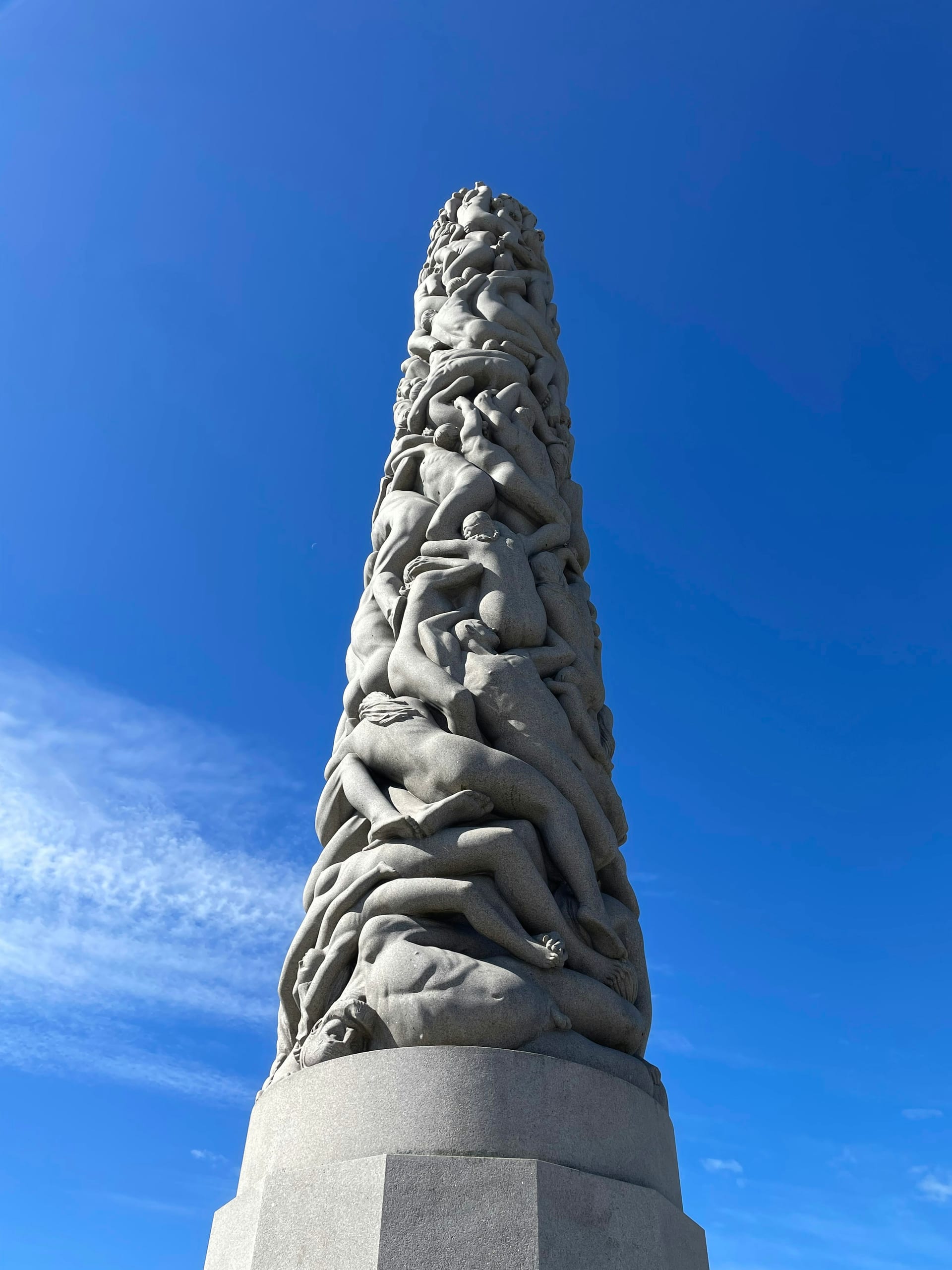
It's strange art in the best sense: not pretty, not comfortable, but impossible to walk through quickly. Allow ninety minutes. Go early if you want photos without strangers in frame. The park connects to a larger green space; if the weather clears, keep walking west into the residential streets of Frogner — expensive, quiet, full of embassies and nineteenth-century villas.
The Akerselva walk nobody puts on the itinerary
This was my favourite discovery. The Akerselva river cuts nine kilometres through the city from Maridalsvannet lake to the fjord near Bjørvika. For most of the twentieth century it was an industrial sewer. Now it's a walking and cycling path through neighbourhoods tourists skip.
I started at Mathallen — the food hall in Vulkan, a converted industrial zone — with a $12 cinnamon bun and a coffee that cost more than the bun deserved. Then I walked south along the river for two hours, past waterfalls that once powered paper mills, street art on brick warehouses, and footbridges that creak when cyclists cross. In Grünerløkka, the path runs between cafés and vintage shops; further north it's quieter, greener, more like a forest path that forgot it lives inside a capital.
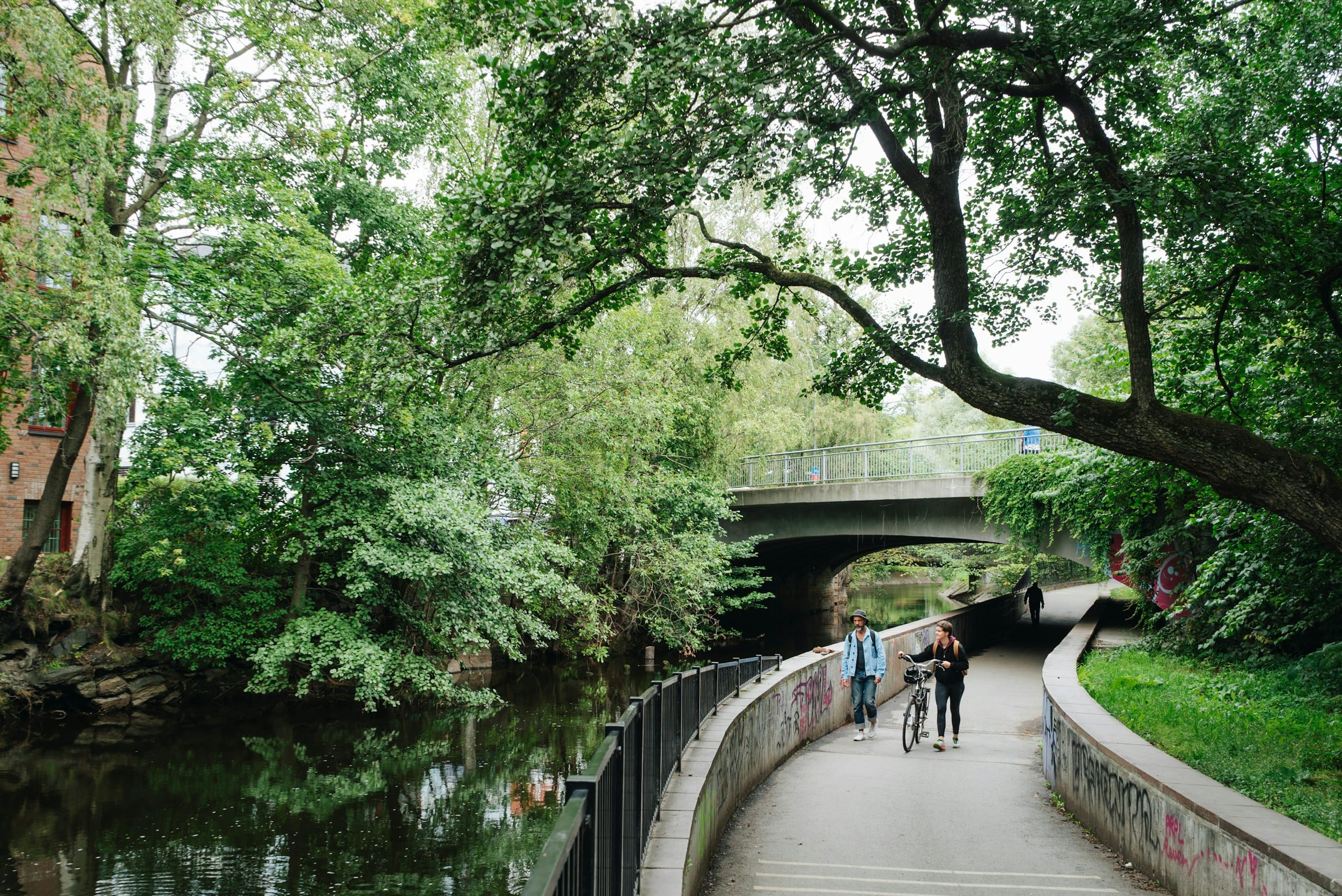
You don't need a guide. Download an offline map, wear decent shoes, and turn around when you're tired. The river ends near the Opera House if you go all the way south — a full cross-section of Oslo in one walk.
What it costs (and how to blunt the pain)
Norway is expensive. Oslo is expensive even for Norway. There is no secret budget hack that makes it feel like Portugal.
A mid-range hotel in Grünerløkka or Sentrum runs $150–220 a night in shoulder season, more in July. Hostel dorms exist — roughly $50–70 — but book early. I ate lunch for $15–20 most days (soup, open sandwich, market hall grazing) and dinner for $35–55 when I sat down properly. A beer at a bar is $11–14. Coffee is $5–7 and good.
Daily budget, mid-range, honest: $160–240 covering a decent room, tram rides, meals, and one museum ticket. That's more than Albania's mountains and less painful than pretending you can do Oslo on $80 a day without misery.
What saves money without ruining the trip: Torvehallerne or Mathallen for lunch instead of sit-down restaurants; the Oslo Pass if you're hitting three or more paid attractions in 24 hours (do the math — it breaks even fast); grocery stores (Meny, Coop) for breakfast and snacks; and walking everywhere the centre allows. Taxis are a last resort.
Oslo vs. Bergen — pick your Norway
This is the comparison people actually need.
Choose Bergen if you want fjords, rain, Hanseatic architecture, and a city that feels like a village with excellent fish soup. I wrote about staying four nights in Bergen instead of a day tour and stand by it for the west coast.
Choose Oslo if you want museums, contemporary architecture, a capital's restaurant scene, and a base for day trips without committing to a week on a boat. You can reach Ålesund's Art Nouveau harbour or the Lofoten islands by flight from Gardermoen faster than you can get there from Bergen by road.
Do both if you have eight or more nights and accept that the inter-city train takes about six and a half hours — scenic, not urgent. Flying is faster and, counterintuitively, sometimes cheaper if you book ahead.
Oslo is not a compromise. It's the administrative and cultural centre of a country that happens to also have world-class scenery elsewhere. Treating it as lesser because it lacks a famous fjord in the city limits is like skipping London because you can't see the Scottish Highlands from Trafalgar Square.
When to go
May and early June: long daylight, manageable crowds, trees in leaf along the Akerselva.
September: my pick. Autumn colour in Frogner, students back, cruise ship count dropping, light that makes the fjord look like smoked glass.
July: warmest, most expensive, most tourists. Book everything.
November–February: dark, cold, cheap flights from the rest of Europe. The museums still work. The harbour still glows at 3 p.m. when the streetlights come on. Pack layers and lower your expectations for outdoor hours.
Where to stay
Grünerløkka — east of the centre, young, café-dense, walking distance to the Akerselva. My choice for a first visit.
Sentrum / Bjørvika — near the Opera House and MUNCH, convenient, pricier, feels more corporate.
Frogner — west, quieter, near Vigeland Park, residential. Good if you want sleep over nightlife.
Avoid staying only near the airport unless your flight is absurdly early. Gardermoen is 45 minutes from the centre by train ($22 each way). The city is the point.
For multi-day hiking in the surrounding forests and DNT trails, Oslo connects to Norway's mountain hut network — basic, honour-payment shelters that are a different trip entirely from urban Oslo, but useful if you're combining capital and trail.
Is it worth it?
Yes, if you give it at least two full days and stop measuring it against fjord postcards. Oslo is expensive, occasionally aloof, and not immediately lovable the way a small harbour town can be. It is also honest, well-run, and full of specific pleasures: a free sculpture park with an angry toddler, a opera roof at sunrise, a river walk through neighbourhoods the guidebooks abbreviate, and a Munch museum that earns the hype.
What I'd skip: the one-day "best of Oslo" bus tour, any restaurant with a plastic troll in the window, and the guilt about not going to Bergen.
What I'd protect: one slow morning on the Opera House marble, one rainy hour in Frogner, one full walk along the Akerselva, and a late dinner in Grünerløkka where the bill hurt but the fish was worth it.
Oslo is where Norway keeps its art, its arguments, and its administrative paperwork. The fjords can wait. Sometimes the capital is the trip.
More places worth the detour on the destinations page.