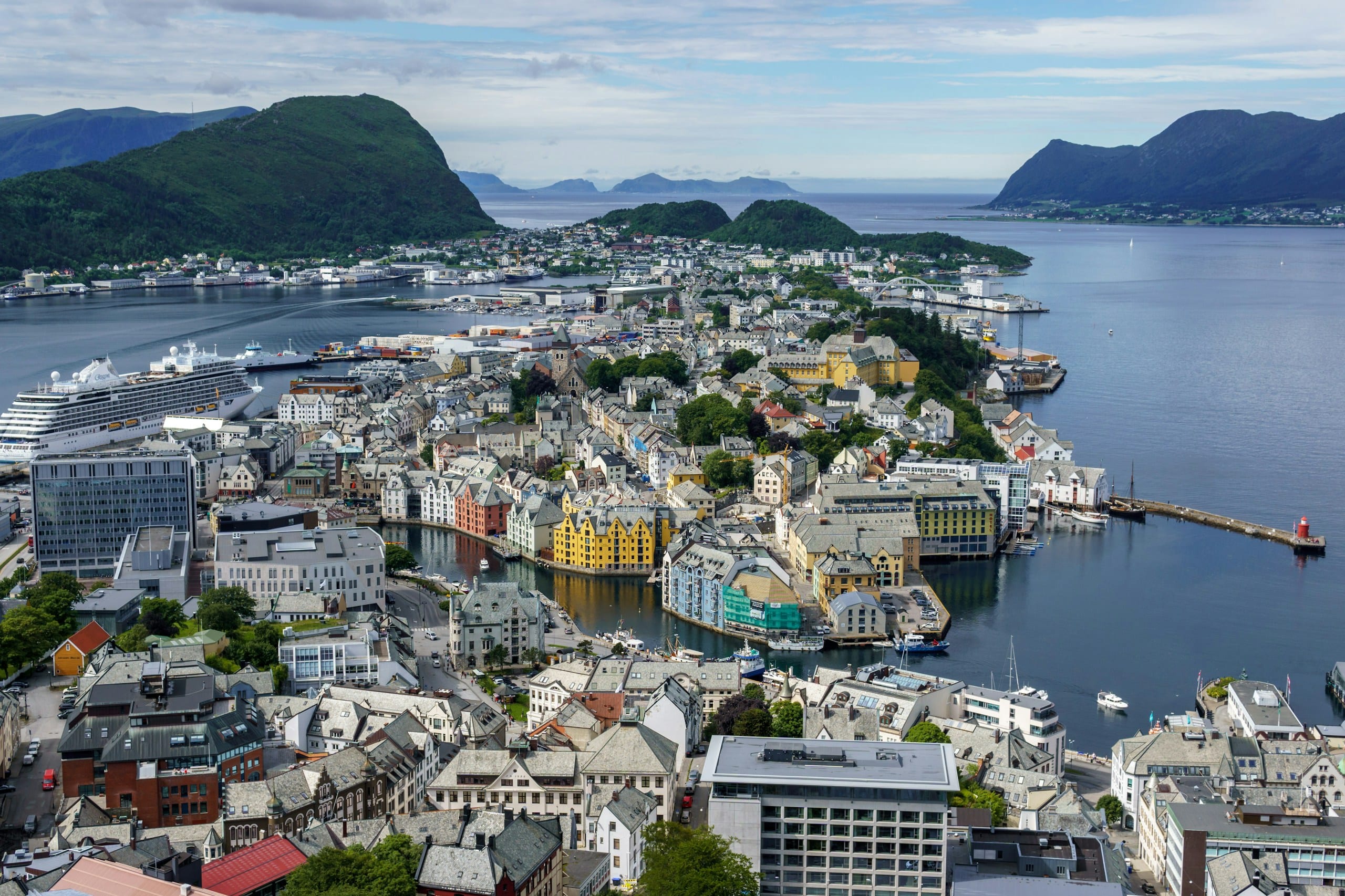
The fire took sixteen hours. On the night of 23 January 1904, a lamp in a fish-drying loft tipped over in Ålesund, and by morning almost the entire wooden town on Norway's west coast was ash. Ten thousand people stood in the snow watching their homes burn. What rose from the rubble is the reason I stayed two nights longer than I'd planned: a compact harbour city rebuilt almost entirely in Jugendstil, the Scandinavian cousin of Art Nouveau, with turrets and spires and pastel facades that look like someone dropped a Viennese street grid onto a cluster of granite islands.
I came for Geiranger. Everyone does. Ålesund sits on three islands joined by bridges at the mouth of the Sunnmøre Alps, and it functions in most itineraries as a pretty gas station — a place to sleep before the Hurtigruten ferry or the day trip to the famous fjord. That framing sells the city short. The architecture alone is worth a full day, and the fjord next door that isn't Geiranger might be the better boat ride.
What Ålesund actually is
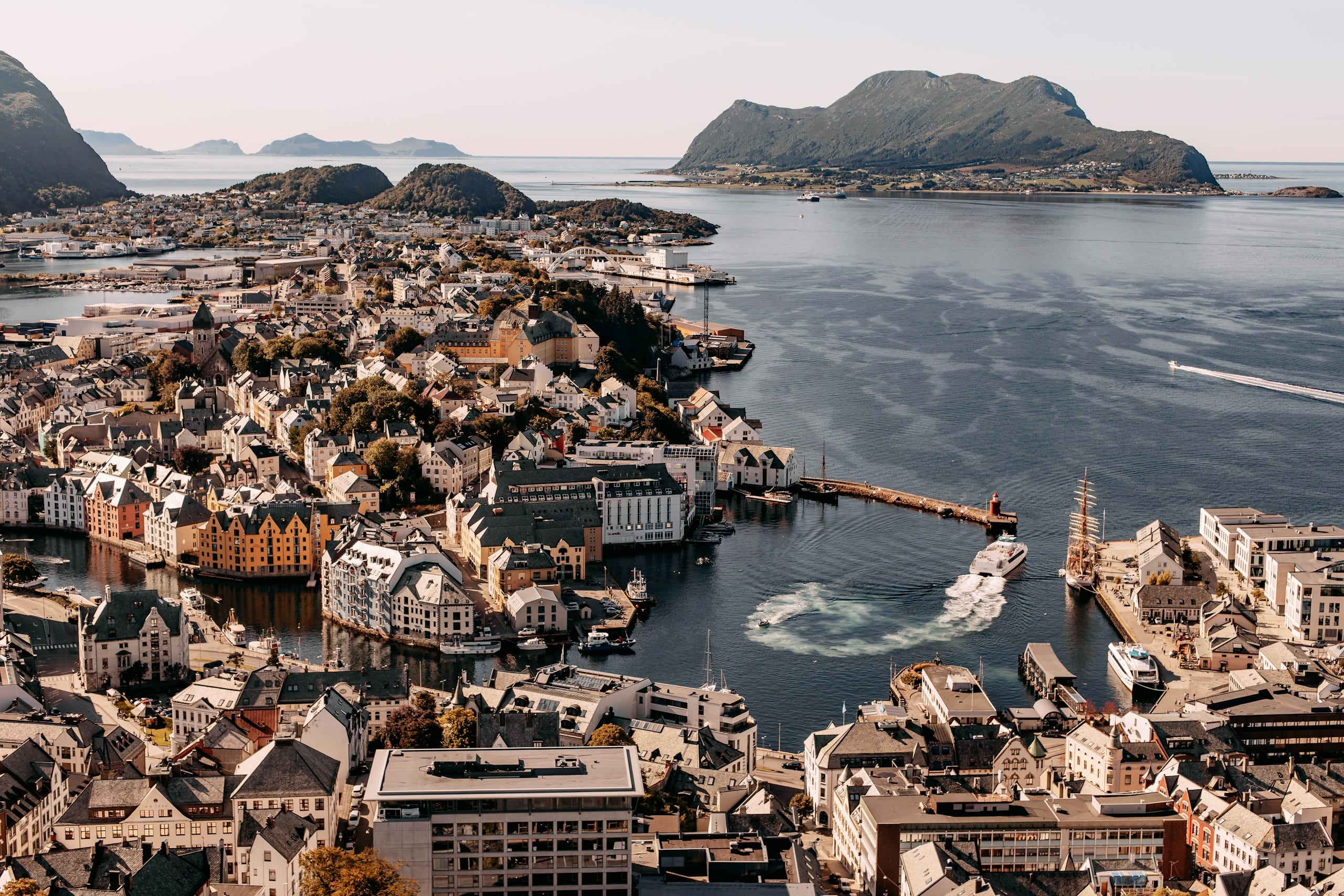
Picture Bergen stripped to a quarter of the size and rebuilt by architects who had just discovered curves. Ålesund has about 50,000 people spread across Aspøy, Nørvøy, and Heissa, with the working harbour on one side and the Brosundet canal threading through the centre like a narrow Venetian cut. The buildings are stone and brick where the old town was timber, decorated with dragon heads, floral reliefs, and bay windows that stick out over the pavement. It is the most coherent Art Nouveau town in Norway, possibly in all of Scandinavia, and it exists because catastrophe forced a blank slate.
Walk the Brosundet on a clear morning and the facades reflect in the canal with almost annoying symmetry. The Jugendstilsenteret — the Art Nouveau Centre, housed in the old Swan Pharmacy building — is the one museum I'd put on a must-do list. Not because museums are my thing, but because fifteen minutes inside explains why every cornice in town looks related. Young Norwegian architects trained in Germany came home after the fire and built what they couldn't have built if the old wooden city had survived.
The whole town burned down in a night. What replaced it is the most deliberate streetscape in Norway — and most visitors never get off the cruise-ship shuttle.
The 418 steps (and the view they buy)
The standard move is Aksla, the hill that rises behind the harbour. There is a viewpoint called Fjellstua at the top, and you can reach it two ways: drive, or climb the Town Steps — 418 of them, painted municipal red, starting near the town park. I took the steps because I am stubborn and because the climb sorts the crowd. Cruise passengers in the wrong shoes turn back around step sixty. You won't.
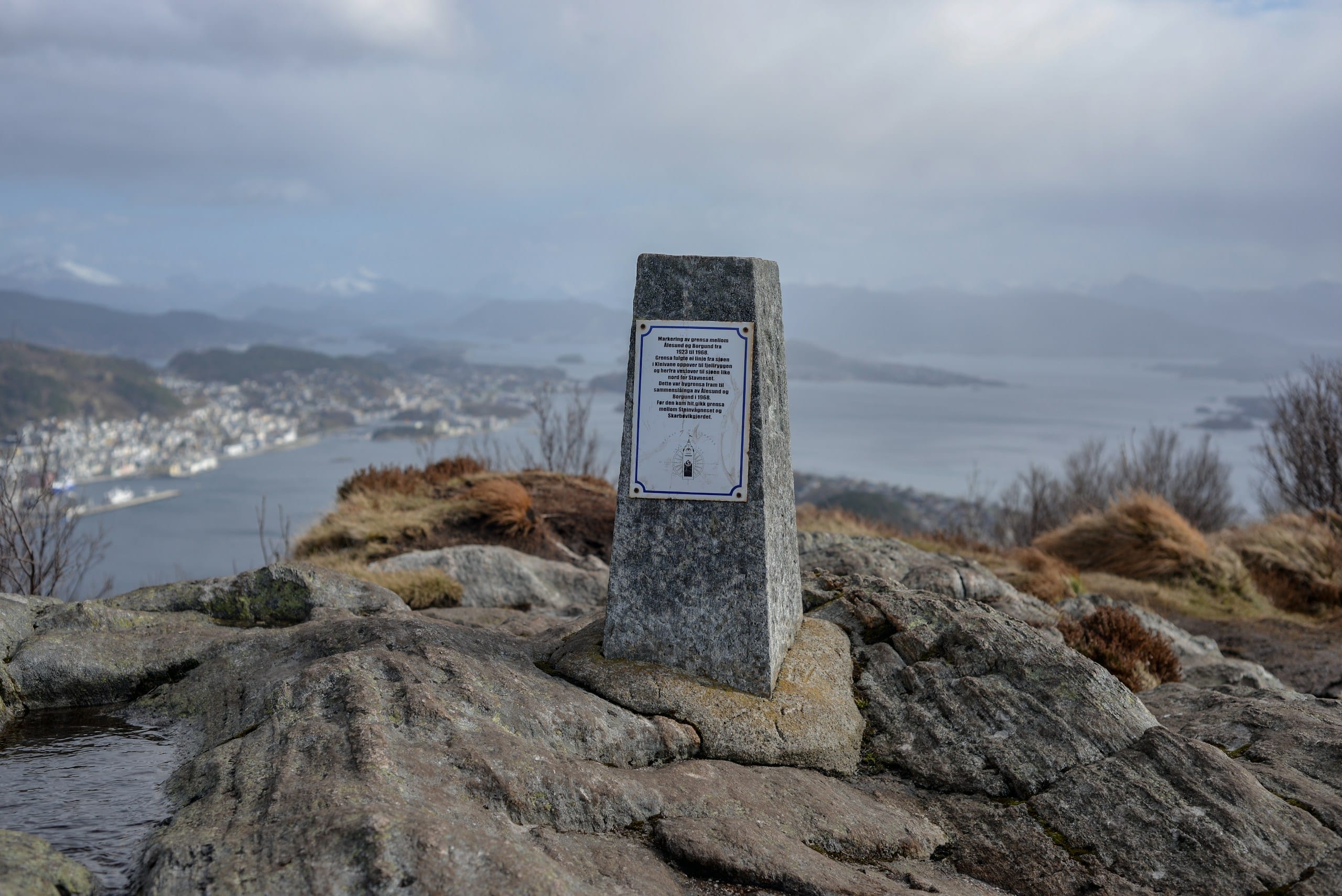
At the top you get the postcard: the whole city spread below on its islands, the harbour opening to the sea, and on a clear day the Sunnmøre peaks behind you with snow that stays late into May. I had one afternoon where the cloud came in sideways off the Norwegian Sea and the view was a grey sheet. I sat in the café at Fjellstua, drank an overpriced coffee ($6, the Norwegian baseline), and waited. Twenty minutes later the cloud lifted enough to see the spires. That is how weather works here — the forecast is a suggestion, not a contract. Pack layers that actually handle damp cold and stop refreshing the app.
What I did besides check Geiranger off a list
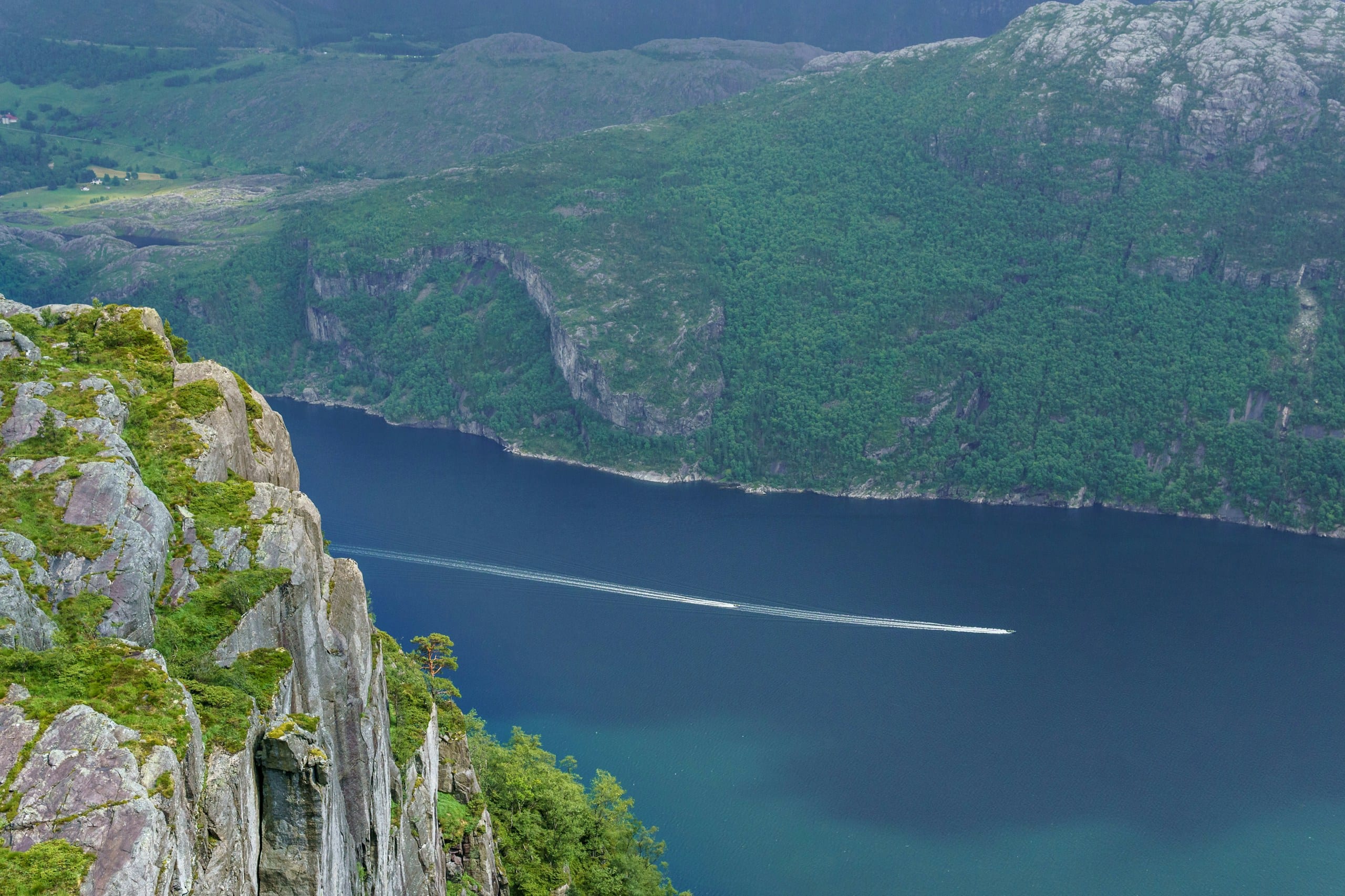
Geirangerfjord. Yes, I went. The ferry from Ålesund to Geiranger (via Hellesylt) is the classic day trip, roughly $55–75 depending on season and how far ahead you book, and the scenery earns its reputation — sheer walls, waterfalls that turn to spray before they hit the water, the whole Norwegian cliché in one fjord. It is also crowded in July and August, full of tour buses at every viewpoint, and the village of Geiranger itself feels like it exists to sell you a magnet. Go once. Go on a weekday in May or September if you can. Bring a small daypack with rain gear and lunch, because the onboard food is cruise-ship pricing.
Hjørundfjord. This is the move I'd repeat. Sunnmøre's other deep cut, less famous, less trafficked, with the same alpine-meets-water geometry and a fraction of the selfie sticks. You can reach it by bus and ferry from Ålesund in a long day, or book a shorter boat tour that skips the highway transfer. The mountains here — Slogjen, Kolåstinden — are serious, the kind of peaks Norwegians climb on weekends without making a film about it. I liked it better than Geiranger because it felt like something people live next to rather than something people queue to see.
Walk the harbour at low tide. The working side of Ålesund is still fish and aquaculture — salmon cages, supply boats, the smell of diesel and salt. The tourist side is Brosundet and Apotekergata. The gap between them is about four blocks and a century of economic shift. I ate fish soup ($22, bread included, actually good) at a harbour café where the clientele was locals in high-vis jackets, not cruise lanyards.
Atlantic Sea Park. If you have kids, or if you like seabirds more than architecture, this aquarium on the western island of Tueneset is well done — underwater tunnels, puffins, a seal pool. About $35 for an adult ticket. I went on a rain day and considered it money well spent.
When to go, and what it costs
Norway is expensive everywhere; Ålesund does not get a discount for being smaller than Oslo. A decent hotel in the centre runs $150–220 a night in summer, less in the shoulders. Hostels and guesthouses exist but book early — the city fills when the cruise calendar fills, and that calendar is thick from May through September.
Weather is Bergen-adjacent: expect rain, wind, and sudden sun. Locals say 220-odd days with precipitation; I believe them. May and early June give you long light and green hillsides before the peak crush. September is my pick — fewer ships, autumn colour on the lower slopes, and the first proper darkness returning to the sky.
The cruise-ship problem is real. On a busy day three or four large ships can dock at once, and the centre clogs between 10 a.m. and 4 p.m. with people on tight turnaround schedules. The fix is the same as everywhere else: be out early, eat lunch late, and save the harbour walk for evening when the buses have gone back to the pier. Sleep in town, not in a roadside chain hotel outside the islands.
Where to stay
You want to be on one of the central islands — Aspøy or Nørvøy — within walking distance of Brosundet. Some of the harbour-front hotels occupy converted warehouses and clipper buildings; they cost more but you wake up to boat masts outside the window. Budget travellers: look at guesthouses up the hill from the centre, still walkable, quieter at night. If you're continuing north toward the Arctic archipelago, the Lofoten islands are a long day's drive or a short flight away — different Norway, same expensive beer.
For multi-day hiking in the Sunnmøre Alps proper, the region has mountain huts and simple lodges on the Norwegian DNT model: basic, honest, often unlocked with an honour-payment box.
Is it worth it?
Yes, if you give it at least two nights and treat it as a destination, not a transfer point. Ålesund rewards slow walking — reading the facades, climbing Aksla twice (once in sun, once in cloud), eating fish soup somewhere that doesn't have a English-only menu board. It is not worth a four-hour cruise-ship stop where you buy one sweater and a photo from the hill. You can do that and leave wondering what the fuss is about.
What I'd skip: treating Geiranger as the only reason you came. What I'd protect: a full morning with no plan on the canal, and one boat trip to a fjord that isn't the famous one.
If you want Norway's granite-and-sea drama with fewer tour buses and more walking, Lofoten in the shoulder months is the other end of the country and a different mood entirely — rawer, colder, less architectural. Ålesund is the cultured cousin: pretty on purpose, rebuilt from ashes, still making its living from the sea. Bring binoculars if you have them; the seabird colonies on Runde island, an hour south by car, are worth an afternoon if the weather holds.
More places worth the detour on the destinations page.