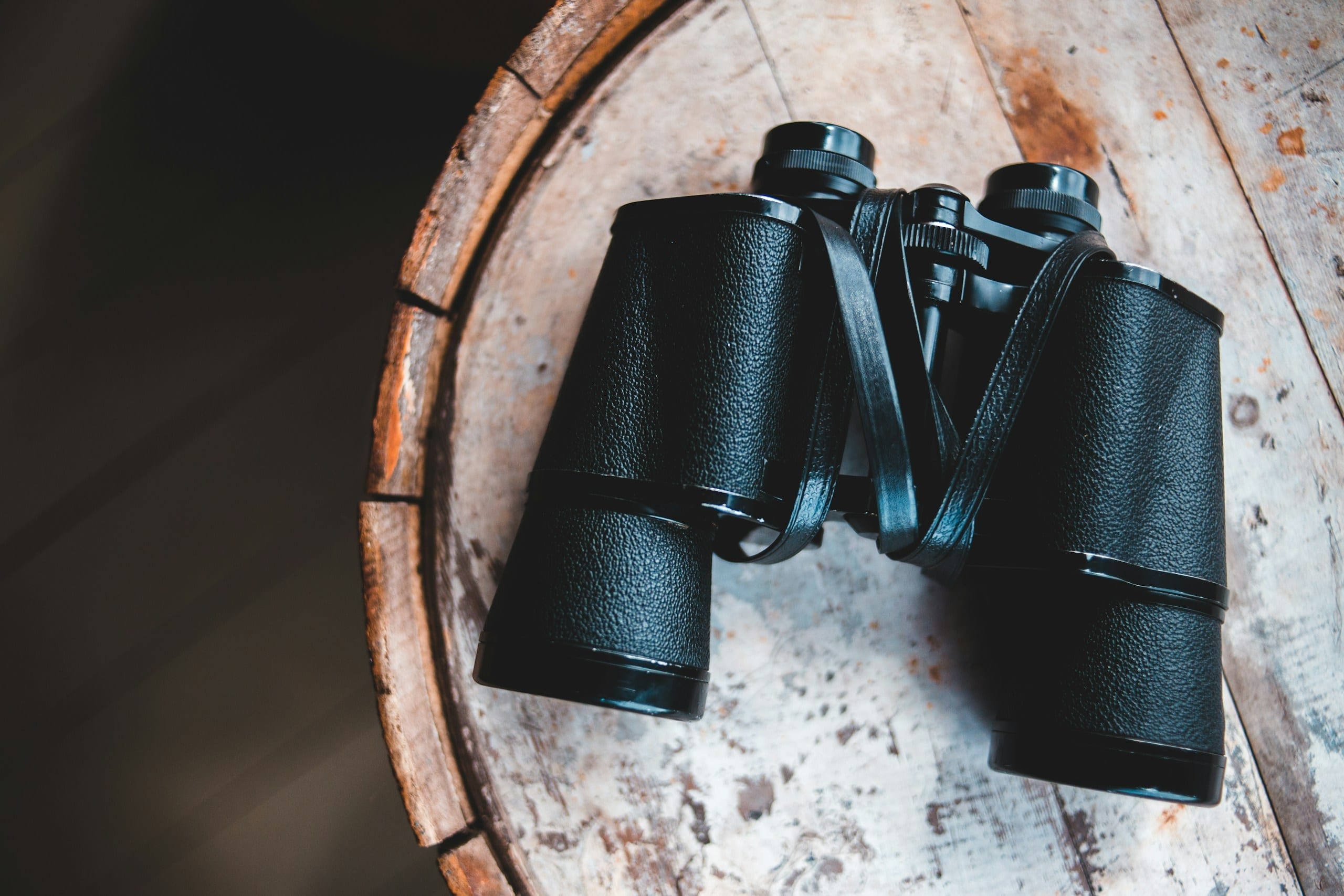
The first time a stranger handed me their binoculars on a boat — we were watching a sea eagle work a cliff in northern Norway — I understood within about three seconds that I'd been travelling wrong for years. The bird went from a distant smudge to a thing with feathers and intent. I bought my own pair within the month and I have not taken a serious trip without them since. They're the bit of gear people roll their eyes at until they look through them once.
This isn't about birdwatching, or not only. Binoculars are for the carved saint forty feet up a cathedral facade, the snow conditions on the pass you're about to walk, the fishing boats out on the fjord, the deer on the far hillside that everyone else walked past. They pull the far-away middle distance — the stuff your phone camera turns to mush — right up to your face.
What to look for
Binoculars are described by two numbers, like 8×32. The first is magnification (8×, 10×). The second is the diameter of the front lenses in millimetres (32, 42), which governs how much light they gather and how big and heavy they are.
For travel, here's the honest guidance:
- Magnification: 8× beats 10× for most people. Higher magnification sounds better and isn't, usually — 10× shakes more in your hands and has a narrower field of view, so you lose things. 8× is steady, easy to aim, and forgiving.
- Lens size: 32mm is the travel sweet spot. An 8×32 is bright enough for daytime and small enough to carry. 8×42 is brighter in low light (dawn, dusk, dense forest) but bigger and heavier. The pocketable 8×25 or 10×25 compacts are great for weight but dim and fiddly — fine for cities and theatre, frustrating at dusk.
- Prism type. "Roof prism" models are the slim, straight-barrelled ones; "porro prism" are the chunkier zigzag shape, often cheaper and sometimes optically better for the money, but bulkier. For packing, roof prisms win.
- Close focus. Often ignored, genuinely useful — a pair that focuses down to two metres lets you look at butterflies, market stalls, and museum detail, not just distant things.
- Waterproofing and fog-proofing. Worth having. You'll use these in rain and spray, and a sealed, nitrogen-filled pair won't fog when you come in from the cold.
Resist the urge to buy more magnification. The best pair is the one steady enough that you actually raise it to your eyes.
Roughly what it costs
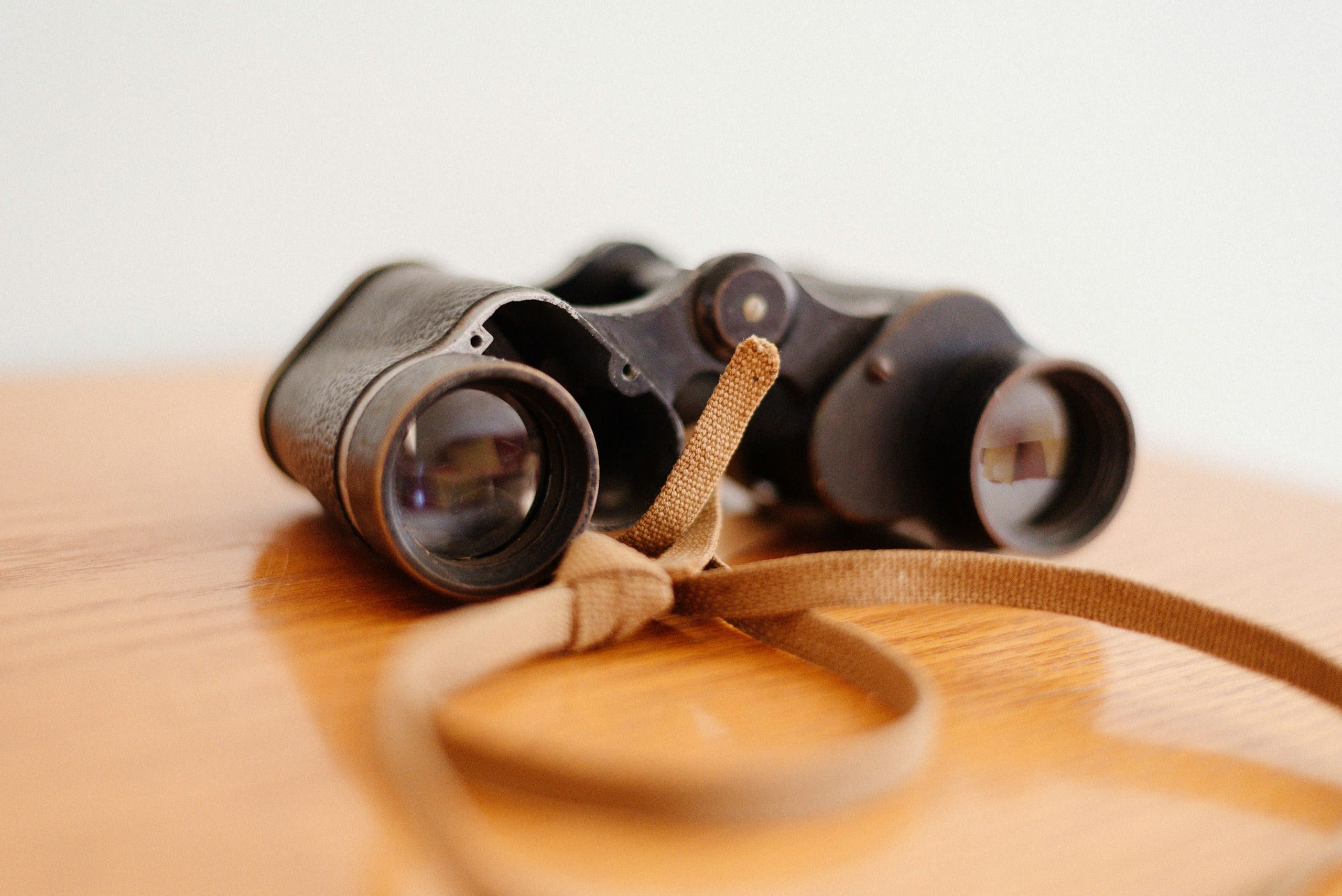
This is a category where the money is visible, but the floor is high:
- €40–100: entry level. Surprisingly usable now; a decent 8×32 here will delight a first-timer. Edges may be soft and low light is weak.
- €150–350: the value sweet spot. Sharp, bright, waterproof, light. This is where I'd spend, and where most people never need to go beyond.
- €700+: the famous European glass. Genuinely better — brighter, sharper to the edges, a joy — but the gap over a good mid-range pair is small and the price gap is enormous. For travel, not necessary.
Buy once at the mid-range and you'll likely keep them for a decade.
Where to buy
Optics shops, camera shops, and outdoor retailers, and ideally in person — looking through several pairs for ten minutes tells you more than any spec sheet, because brightness and "ease of view" are partly subjective. Birdwatching specialists give the best advice and often let you test pairs outside. If you buy online, buy from somewhere with a real returns policy and compare two pairs at home before committing.
The downsides
- Weight and bulk, even at 32mm. A compact lives in a jacket pocket; a 42mm needs a place in the bag and a strap around your neck.
- One more thing to not lose or sit on. A neck strap or a harness solves the dropping problem and keeps them ready.
- They mark you as a tourist in some settings, which occasionally matters. Be sensible about where you raise them — pointing binoculars at people's windows or across borders is a quick way to a difficult conversation.
My honest take
For the weight, nothing else in my bag adds as much to a trip. A pair of 8×32s turned a boat trip in Lofoten into proper wildlife watching, let me read the route up a peak above Kazbegi in Georgia before committing my legs to it, and have rescued more dull waits — at stations, on ferries, in airport lounges with a window — than I can count. They suit the kind of slow, sit-and-watch travel I keep ending up doing, the sort of unhurried day where the watching is the point.
If you only do cities and beaches, a pocket 8×25 is plenty and you'll still be glad of it at the next viewpoint. If you walk, watch wildlife, or just like seeing things properly, get an 8×32 in the mid-range and accept the small weight penalty. You'll wonder how you managed without them. More of what I carry over on the gear page.