The booking confirmation said 7:15 a.m. pickup for Norway in a Nutshell — train to Myrdal, switch to the Flåm Railway, bus to Gudvangen, ferry through Nærøyfjord, train back to Bergen by midnight. The whole circuit in one day, the way every guidebook recommends. I looked at the price ($220, lunch not included), looked at the weather forecast (rain, then more rain), and canceled it.
That turned out to be the best decision of the trip.
Bergen is Norway's second city — about 290,000 people on the west coast, tucked between seven mountains and a working harbour — and almost everyone treats it as a transfer point. Fly in, photograph Bryggen, ride the funicular, board the Hurtigruten or the day tour, leave. I gave it four nights instead, and the city behind the UNESCO waterfront turned out to be the part worth writing about.
What Bergen actually is
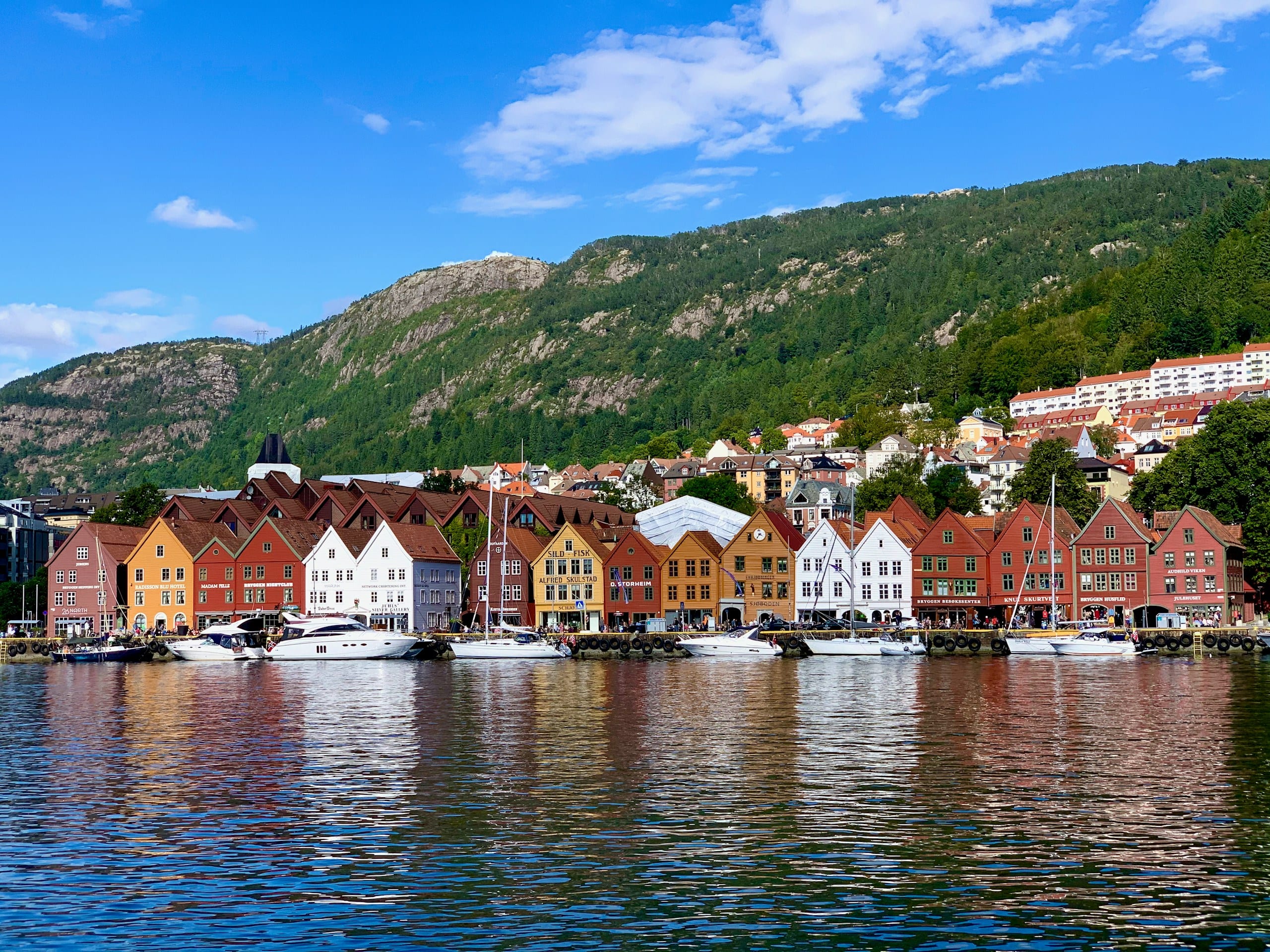
Picture a Hanseatic warehouse district glued to a hillside city that refuses to flatten itself. The famous waterfront — Bryggen, the row of leaning wooden gables painted ochre and red — is real, and it is also the most photographed 400 metres in western Norway. Behind it, Bergen climbs. Steep streets, wooden houses from the 1700s, staircases that double as streets, a university with 25,000 students, and a fish market that smells exactly the way you'd expect a fish market to smell.
The city gets roughly 240 days of measurable precipitation a year. Locals don't apologize for this. They sell umbrellas at the airport and keep walking. I arrived in late May with a merino base layer under a shell jacket and wore both every single day. On the one afternoon the sun came out, the whole harbour looked like someone had turned up the saturation. People stopped mid-stride and stared at the mountains. Then the cloud came back. That is Bergen.
The rain is not a bug. It is the reason the hills stay green and the crowds stay thin on the walking trails.
Bryggen: worth it once, then walk away
I won't tell you to skip Bryggen. You shouldn't. The Hanseatic wharf has been a trading post since the 1300s, burned and rebuilt more times than the guidebooks bother counting, and the narrow alleys between the warehouses — wooden passages so tight you can touch both walls — are genuinely strange and beautiful. UNESCO listed it in 1979 for good reason.
What I'd tell you is when to go. Early morning, before the cruise passengers finish breakfast, Bryggen belongs to delivery workers and photographers with tripods. By 10 a.m. on a summer weekday, the alley shops are open and the tour groups arrive in waves. By noon you are buying a $12 cinnamon bun from a bakery that knows exactly what it is doing. The bun is good. The crowd is not.
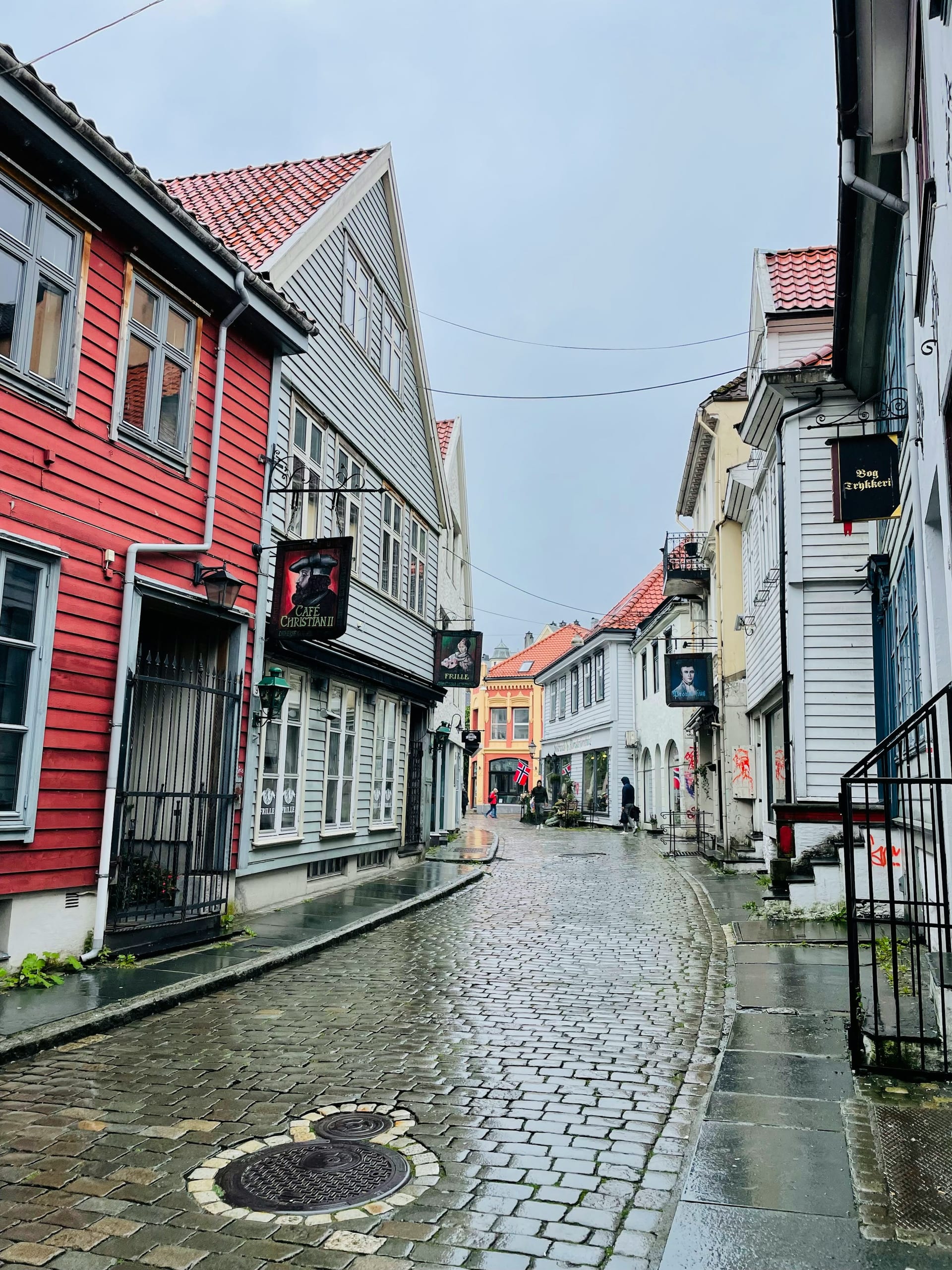
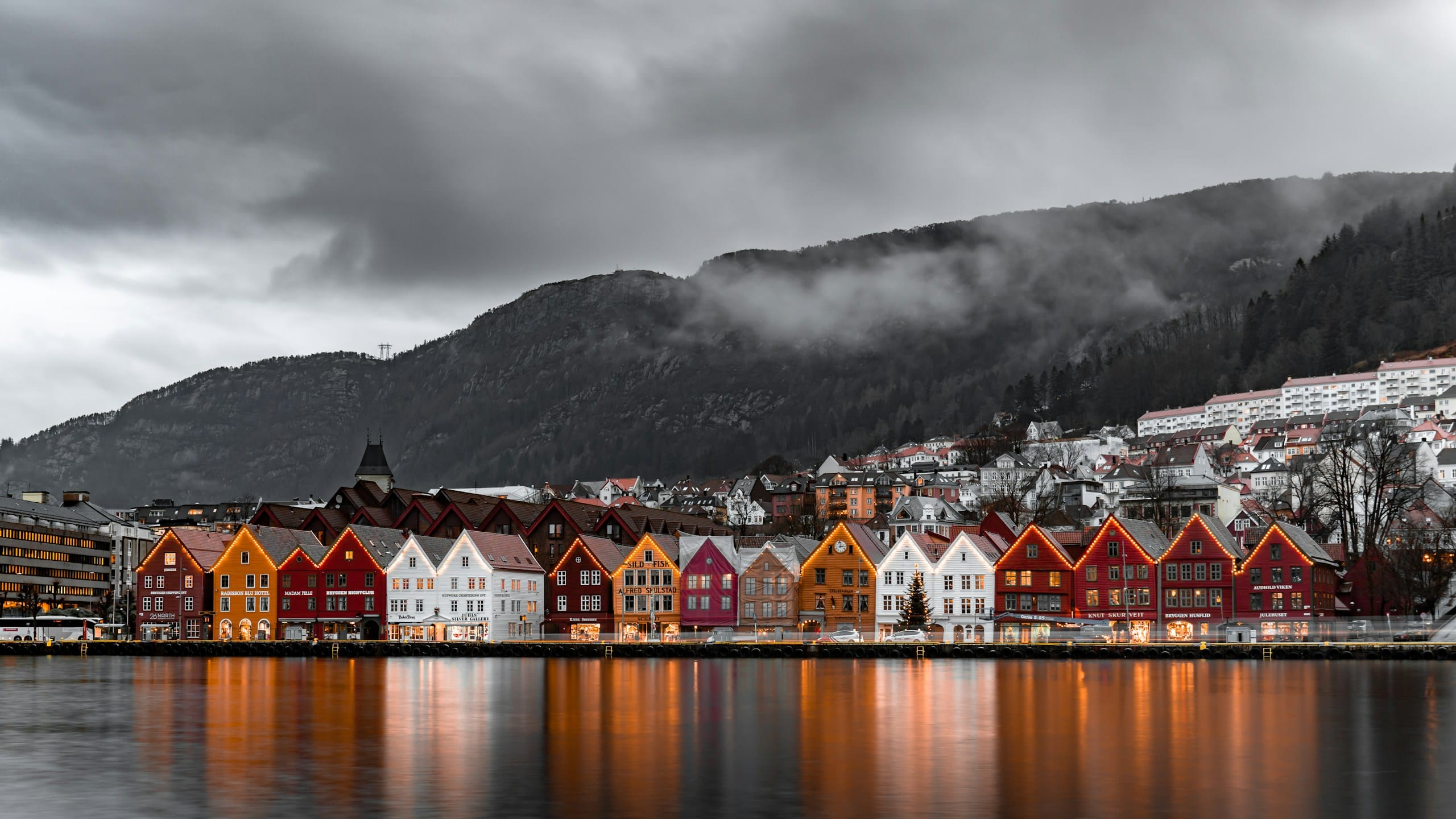
Walk through Bryggen once properly — read a facade, poke into the Hanseatic Museum if you want the history, get your photo from the harbour side when the light is flat and grey because flat grey is the honest light here. Then leave the waterfront and go uphill. That is where Bergen stops performing for tourists.
Fløyen and the seven mountains
Bergen sits at the base of seven mountains — the city even hosts an annual footrace up all of them, which tells you something about the local personality — and the easiest one to reach is Fløyen. The Fløibanen funicular runs from the city centre to the summit in six minutes, about $35 round trip for an adult, and on a clear day the view explains why people live here despite the weather. The whole city spreads below you: harbour, fjord, islands, the suburbs climbing the opposite hills.
I took the funicular up and walked down. That is the move. The forest trail from Fløyen back to town takes roughly 45 minutes, mostly downhill, through spruce and birch with occasional gaps where you can see the water. You pass joggers, families, a woman walking three dogs. Nobody is selling you anything. A small daypack with a rain layer is enough; you don't need boots for this one.
On my second attempt — the first ended in fog so thick I could see maybe thirty metres — I could make out the harbour, the cruise ships (too many, always too many), and the mountains across the water turning blue-grey in the distance. I sat on a wet bench and ate an apple. A Norwegian teenager asked me if I spoke English, then practiced his by recommending a bakery near the fish market. That interaction was worth more than the view, which is saying something because the view was excellent.
What I did that wasn't a day tour
The fish market (Fisketorget). It is touristy. It is also where I ate the best meal of the week: a bowl of fish soup ($18, bread included, salmon and cod in a cream broth that wasn't trying to impress anyone) at an outdoor counter while it rained sideways. The live king crab tanks are theatre. The dried fish and brown cheese are real. Buy the soup, skip the souvenir troll.
KODE art museums. Four buildings around Lille Lungegårdsvann lake, one combined ticket (about $20), and a proper Edvard Munch collection that most visitors walk past because Munch is Oslo's problem, not Bergen's. I spent a rainy afternoon here and didn't regret a minute.
Nordnes peninsula. Walk west from the centre along the waterfront, past the aquarium (skip unless you have kids), into the old wooden neighbourhood on the peninsula. Small houses, narrow lanes, locals on balconies. No shops selling reindeer skins. This is the residential Bergen that the Bryggen postcards don't show.
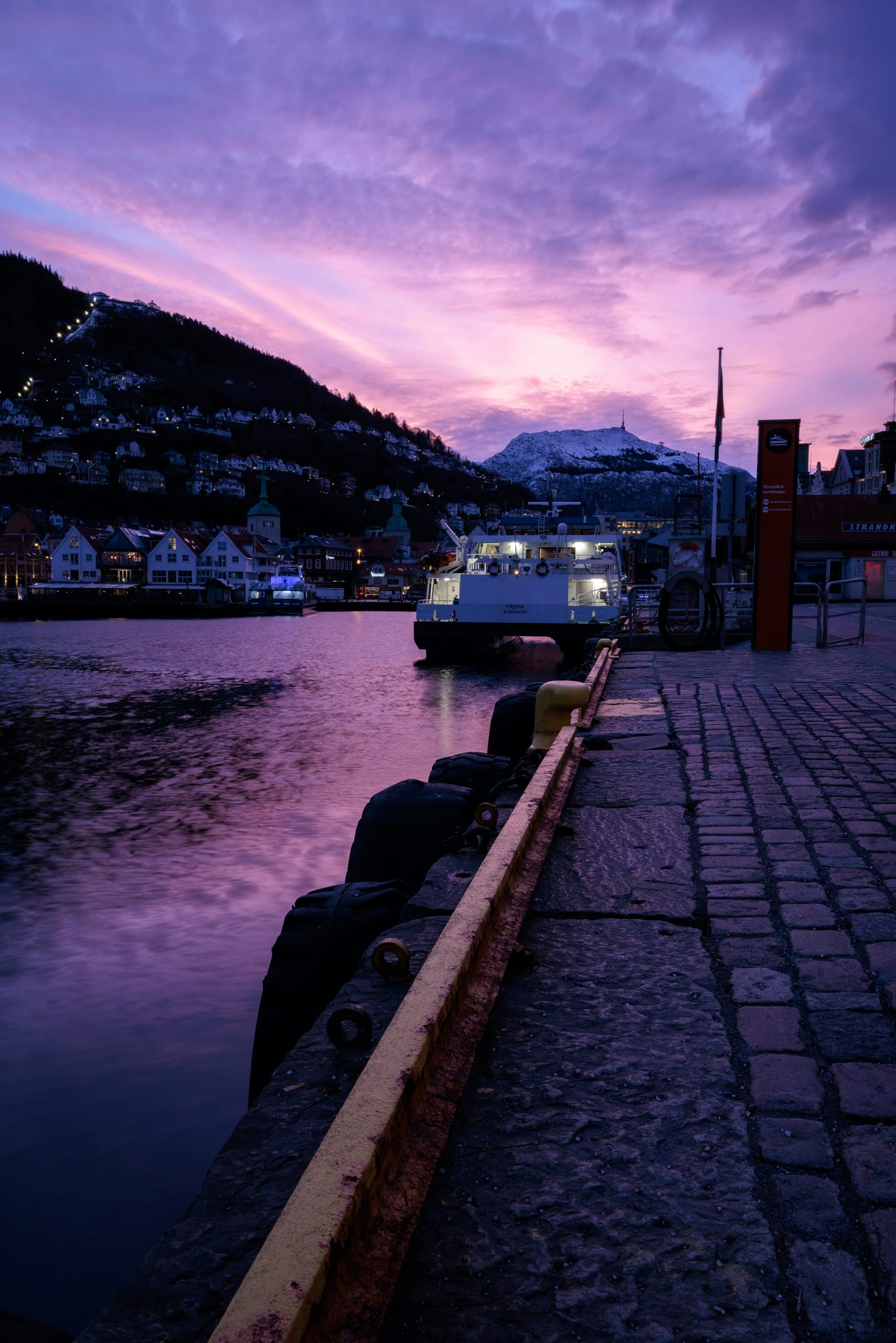
Evening harbour walk. After the cruise buses leave — usually by 6 p.m. — the waterfront empties out. The light at 9 p.m. in May is still usable. The boats in the marina creak. I walked from Bryggen to Skolten and back without seeing another tourist with a lanyard.
What Norway in a Nutshell would have cost me
I'm not saying the fjord tour is bad. Nærøyfjord is a UNESCO site for a reason — narrow, dark water, cliffs that go straight up, the kind of scenery that makes you quiet. But doing it in one day from Bergen means twelve hours on someone else's schedule, packed into peak season with 400 other people who all want the same window seat on the ferry.
What I did instead: a local bus to Troldhaugen, Edvard Grieg's house (twenty minutes south of the centre, $15 entry, a composer who chose to live here for a reason), a long lunch at a place called Bare Restaurant where the tasting menu was $85 and actually justified, and an evening reading in a café while the rain did its thing. Slower. Less scenic in the Instagram sense. More like a city I might actually live in for a week.
If you want the fjord, book an overnight in Flåm or Gudvangen and go early. If you want Bergen, stay in Bergen.
When to go, and what it costs
Norway is expensive everywhere. Bergen does not offer a budget escape hatch.
A central hotel runs $140–200 a night in shoulder season, $200–280 in July and August. Hostels exist — roughly $45–65 for a dorm bed — but the good ones near the centre fill fast when the cruise calendar fills. Airbnb in the Nordnes or Sandviken neighbourhoods can be cheaper and quieter than the Bryggen-adjacent options.
May and early June give you long daylight and fewer ships than peak summer. September is my pick: autumn colour on Mount Fløyen, the student city humming again, and the cruise count drops. Winter is dark and wet but the city knows how to be cosy — candles, wool, fish soup — and flights from the rest of Europe are cheaper.
The cruise-ship problem is the same as Ålesund: on a bad day three or four ships dock at once, and the waterfront clogs between 10 a.m. and 5 p.m. The fix is identical. Out early, in late, eat lunch at 2 p.m., save the harbour for evening.
Where to stay
Stay within walking distance of the centre — Sentrum, Nordnes, or Nøstet — so you can retreat indoors when the rain picks up without needing a bus. The waterfront hotels cost a premium for a view you can get free from Fløyen. I stayed up the hill in Sandviken, in a guesthouse that was a ten-minute walk from Bryggen and half the price of the harbour-front options. Waking up to quiet streets instead of tour-guide microphones was worth the extra calf workout.
If you're continuing north, Bergen is the natural jumping-off point for the Lofoten islands — fly or take the coastal route — or south to Ålesund's Art Nouveau streets. For multi-day hiking in the surrounding mountains, the region has mountain huts on the Norwegian DNT model: basic, unlocked, honour-payment.
Is it worth it?
Yes, if you give it at least three nights and treat it as a city, not a fjord launch pad. Bergen rewards slow movement — the uphill neighbourhoods, the rainy museum afternoons, the harbour when the ships leave. It is not worth a single day between flights where you sprint through Bryggen and call it done.
What I'd skip: the Norway in a Nutshell circuit in peak season, the fish market king crab photo op, and any restaurant with a plastic Viking outside. What I'd protect: one foggy morning on Fløyen, one fish soup in the rain, and a full evening walk along the harbour when the city stops selling itself and just breathes.
Bergen is wet, expensive, and crowded at the waterfront by noon. It is also the most lived-in city on the Norwegian west coast, and the one I'd return to when I wanted a week of ordinary days in an extraordinary setting — not a checkbox on the way to a fjord.
More places worth the detour on the destinations page.