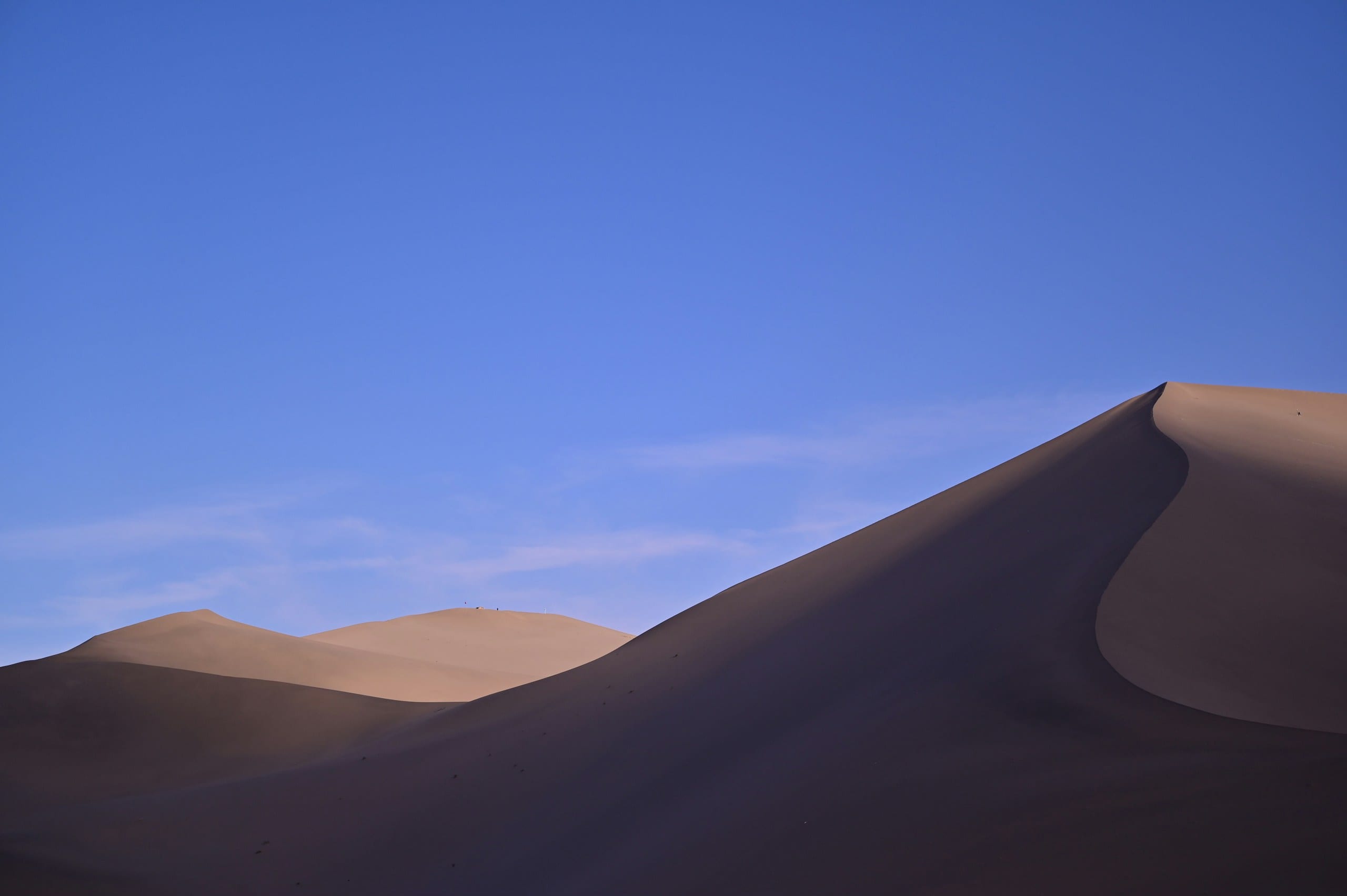
The sand made a sound like a low engine when I slid down the dune on my backside, which is not something I expected from a pile of minerals. Mingsha Mountain — "Echoing Sand Mountain" — lives up to the name on a dry afternoon when the wind is wrong and hundreds of tourists are sliding, stomping, and riding plastic sleds down the same slope. It is ridiculous. It is also one of the strangest sensory memories I have from China, and I say that as someone who has eaten Chongqing hotpot until my lips went numb.
Dunhuang is a city of about 190,000 in far northwest Gansu, pressed against the Gobi where the Hexi Corridor runs out of useful road. Chinese travellers know it for the Mogao Caves and the dunes; most Western visitors have never heard of it — partly because it is a long way from anywhere, partly because Beijing and Shanghai eat the oxygen. If you want China that feels like a borderland rather than a megacity, this is the direction to look.
What you are actually visiting
Three things stack here: a desert that should not contain a lake, a cliff full of Buddhist art that should not have survived fifteen centuries, and a modern town that exists mainly to feed and bus people between the two.
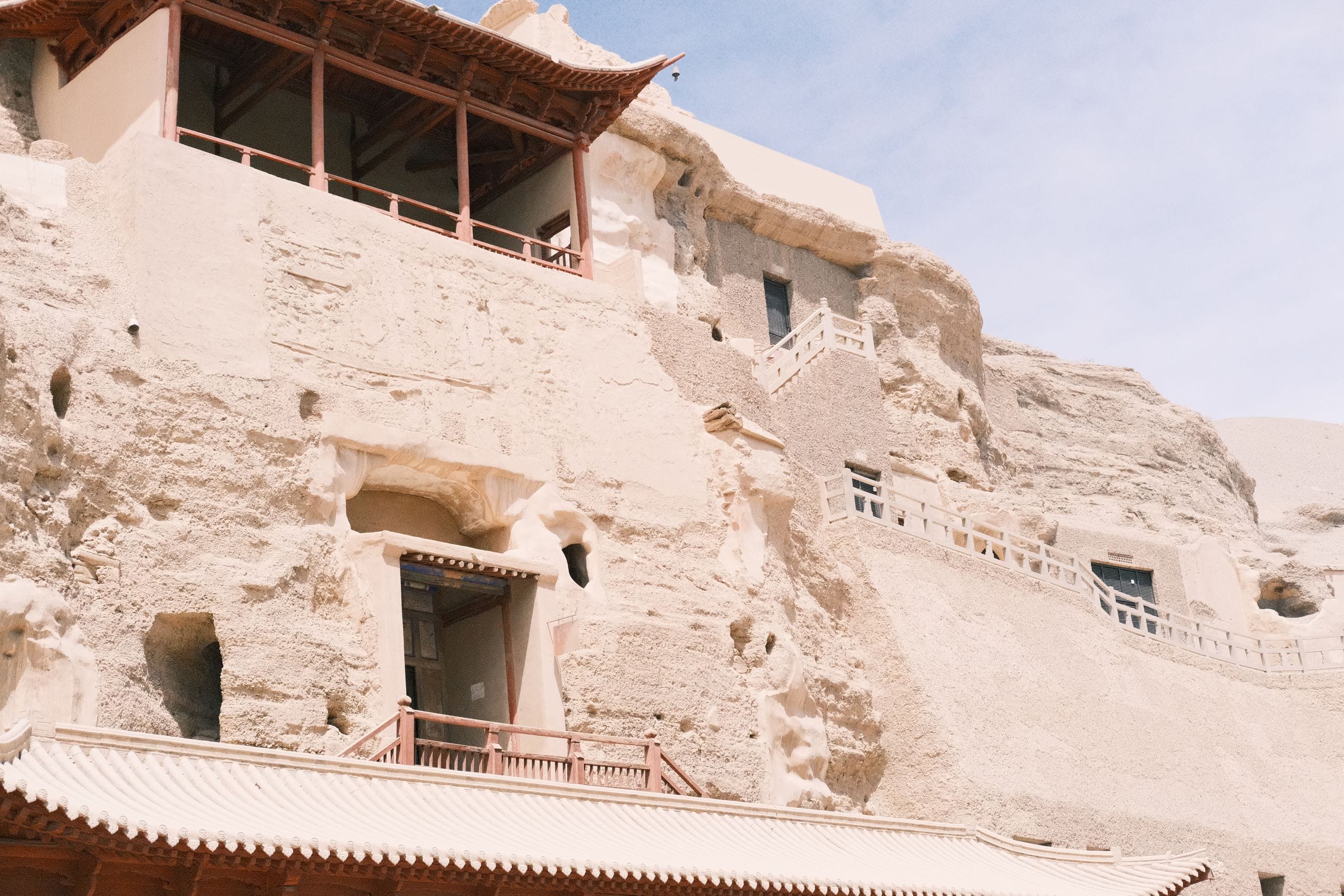
The Mogao Caves — the Thousand Buddha Grottoes — are a UNESCO site roughly 25 km southeast of town. Monks carved and painted them from the 4th century onward; for a thousand years Dunhuang was where Silk Road traffic pooled long enough to pay for murals and scrolls that later scattered to museums worldwide. The Dunhuang Academy manages access now. Photography inside is banned — flash and breath damage pigment — so you cannot substitute Instagram for being there.
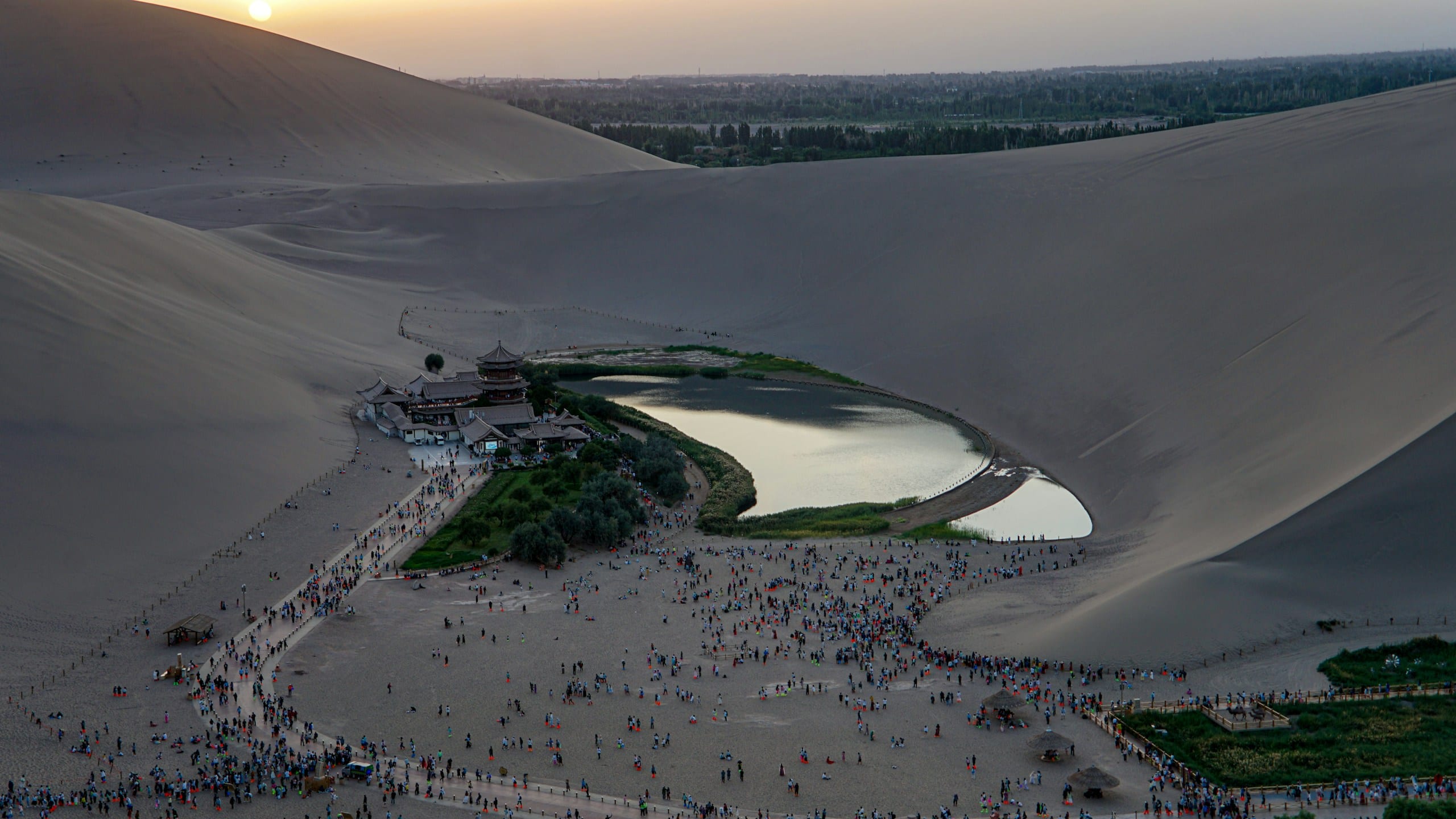
Closer to town, Mingsha Mountain and Yueyaquan (Crescent Lake) are dunes above a crescent-shaped spring that has somehow not been swallowed by sand. Touristy. Also genuinely odd.
The caves are why you fly or train for two days. The singing sand is why you remember the trip on your skin.
The Mogao ticket problem (read this before you book)
This is the part guidebooks bury in a footnote and it will ruin your week if you ignore it.
Standard Mogao visits run through timed entry slots and a fixed route — usually around eight caves per ticket, in a group with a guide, for 45–90 minutes inside the cliff. Capacity is capped. In peak season (July–August, Golden Week), tickets sell out days ahead. For certain high-value caves, allocation can involve a lottery that changes year to year. I booked early and still spent an anxious evening refreshing a Chinese-language portal with translation help.
Reserve as soon as your dates are firm; bring passport details exactly as on your ID; assume you will not get a second chance if you miss a slot. The Dunhuang Academy visitor information is the source of truth — not a blog post from 2019.
Inside, the experience is controlled and worth the bureaucracy. You move cave to cave in low light. Guides name the dynasty on each wall — Tang flying apsaras, Song bodhisattvas with gold leaf still catching the torch beam. Some chambers are small enough to feel like standing inside a painted jewel box; others hold a seated Buddha the size of a house. The colours are vivid enough to feel indecent, given how old they are. Ten minutes in, I stopped thinking of this as "sightseeing" and started thinking of it as reading a manuscript in a language I barely knew.
If you are not prepared for crowds, tight scheduling, and no photos, you will resent it. If you accept those terms, it ranks with anything I have seen — including Matera, except here the persistence is pigment on mud brick in an unforgiving desert.
Mingsha Mountain and Crescent Lake
The dune field sits about 6 km south of downtown. Entry runs roughly ¥110–120 depending on season; from there you walk, ride a camel, or take the cable car toward the ridges. I walked — the camel queue looked longer than the walk itself.
Sunset is the obvious time and everyone knows it. The dunes turn orange, the lake catches the last light, and a PA system plays pop music near the gift stalls. Go anyway, but expect a national-park crowd on weekends. Weekday late afternoon in May was busy but manageable.
The lake is smaller than aerial photos suggest and partly maintained — water is supplemented to keep the crescent from vanishing. In a desert this dry, arguing about pumps feels petty.
Sand sledding (¥20–30 for a plastic board) is brief and fun. Climbing a ridge is harder — each step collapses halfway back, and the view from the top is mostly more sand, which somehow still satisfies. Wear shoes you can shake out. A packable daypack beats a shoulder bag — you want both hands for balance and no zippers full of grit.
The town and getting there
Dunhuang proper is a functional grid of hotels and restaurants — lamb skewers, hand-pulled noodles, watermelon by the slice. The night market is loud, smoky, and where you should eat after a day in sand. A solid dinner ran me ¥60–90 (€8–12).
I skipped the film-set "Ancient City" and the light-show attractions built for package tours. On a return trip I would add Yardang National Geopark — wind-carved rock formations two hours by road, less crowded than the dunes.
Most people arrive by train. The high-speed line from Lanzhou takes roughly 8 hours. From Chongqing or Chengdu you are looking at a multi-leg journey unless you fly. Budget an extra day on each end for ticket pickup and sand in your luggage.
When to go, what it costs
April–May and September–October are the sane windows: warm days, cool evenings, not the 35°C+ furnace of midsummer. Winter is cold and quiet.
Mid-range daily budget: ¥400–700 (€50–90) for hotel, meals, taxis, and one major ticketed site. Mogao and Mingsha are the line items; everything else is cheap by eastern-China standards. Pack sun protection, lip balm, and shoes that tolerate sand. Drink more water than you think — the air is dry enough to crack skin by day two.
The problems
Distance, for one. A week in China with Beijing and Shanghai on the list leaves no room for Dunhuang without sacrifice.
Mogao ticket bureaucracy is real in peak season, especially without Chinese. You share the dunes with tour groups on megaphones — not Kyoto-in-blossom chaos, but not solitude either. Foot traffic erodes the dunes; the lake needs management. None of that should surprise you, but it is worth naming.
Is it worth it?
Yes — if you care about art, desert, or the Silk Road as more than a brand, and you will plan tickets like a military operation. No — if you want a frictionless long weekend from Beijing with your phone out the whole time.
The caves justify the journey. The singing sand and the absurd lake are the bonus that makes the place feel alive rather than museum-preserved. Dunhuang rewarded me for showing up prepared and punished every "I'll figure it out on arrival" assumption. Two full days minimum: one for Mogao, one for Mingsha and the town. Three if you want Yardang. More on the destinations page.