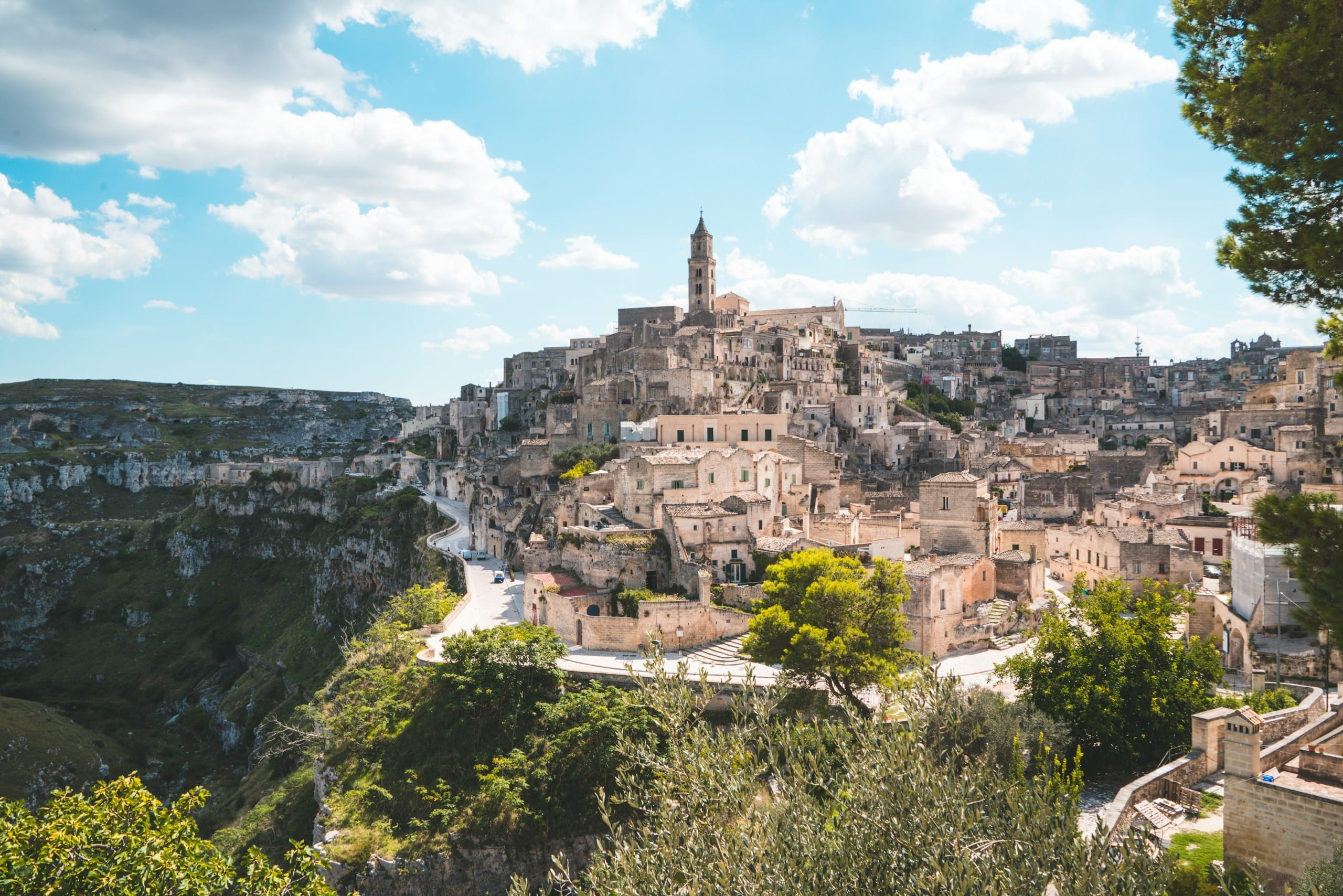
Stand on the edge of the Gravina canyon at dusk and the town of Matera looks like a single pale rock that someone has been carving into houses for nine thousand years, which is more or less exactly what happened. Lights come on one by one in caves stacked up the gorge. A church bell goes. It is the kind of view that makes you go quiet, and I want to be honest that I did not expect that from a place I'd booked mostly because the flights were cheap.
Matera sits in Basilicata, the instep of Italy's boot, a region most Italians themselves couldn't tell you much about. The old town — the Sassi — is two districts of dwellings cut directly into the soft limestone, lived in continuously since the Stone Age. That is not a marketing line. People were living in these caves, with their animals, with no running water, into the 1950s.
From "the shame of Italy" to a film set
Here's the part that reframes the whole place. In 1945 the writer Carlo Levi described the Sassi in a book that landed like a bomb: families of ten in a single windowless cave, malaria, infant mortality that read like the Middle Ages. The government called it la vergogna nazionale — the national shame — and in the 1950s forcibly emptied the Sassi, moving 15,000 people into new housing on the plateau above. For decades the caves sat abandoned.
Then it turned. UNESCO listed the Sassi in 1993. Artists and hoteliers moved back in and restored the caves into homes, workshops, and hotels. Filmmakers noticed the place looked two thousand years old because it is, and Matera has since stood in for Jerusalem more than once — Pasolini, Gibson, and a Bond film all shot here.
Two generations ago the government was ashamed of these caves. Now you pay to sleep in one. Hold both facts at the same time.
I think you travel better here if you carry that history with you rather than just the prettiness. The same cave that's now a design hotel with underfloor heating was, within living memory, a place the state declared unfit for human life. That tension is what makes Matera more than a backdrop.
What to actually do
- Walk both Sassi. Sasso Caveoso is the rawer, more cave-like half; Sasso Barisano is more restored. Get lost on the stepped alleys deliberately — there's no efficient route and you shouldn't want one.
- Go into a casa grotta. These are cave homes preserved as they were, furnished for a family and their mule. Cheap to enter, and the single best antidote to treating the town as scenery.
- See a rupestrian church. Dozens of churches were carved into the rock and frescoed; the Crypt of Original Sin, a little out of town, is sometimes called the "Sistine Chapel of cave painting." Book ahead for that one.
- Cross into the canyon. A path drops from the Sassi down to the Gravina stream and up the far side into the Murgia park, where you can look back at the whole town from the caves where the very first inhabitants lived. It's an hour or two and it's the best walk in the area.
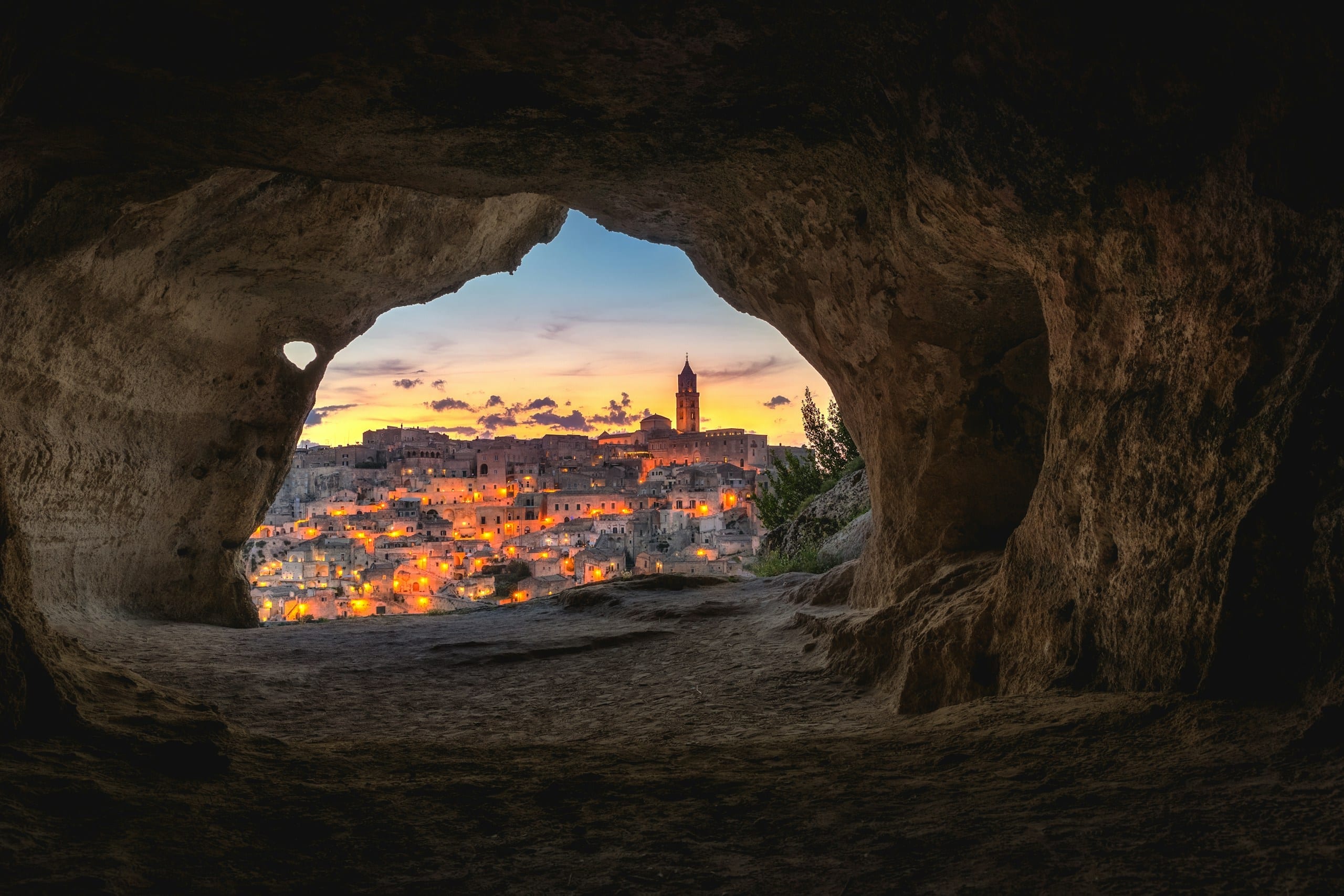
Eat the bread. Pane di Matera is a protected, tall, dense, golden loaf made from local durum wheat, traditionally baked to last a week — peasant food engineered for a hard life, and genuinely delicious. Pair it with the region's crapiata, a humble bean-and-grain stew, and a glass of Aglianico, and you've eaten Basilicata.
When to go, and the honest warning
Spring (April–June) and autumn (September–October) are the sweet spots: warm, walkable, the stone glowing in low light. Summer in Basilicata is brutal — the limestone holds heat and the canyon turns into an oven. Winter is quiet, atmospheric, occasionally cold enough that the cave-damp gets into your bones.
The warning: Matera was a secret ten years ago and isn't anymore. Capital of Culture status in 2019 and the film cameos put it firmly on the map, and the central Sassi now get busy at midday with day-trippers bussed in from the coast. The fix is the usual one — sleep in town, be out early and at dusk, and let the middle of the day be lunch and a nap, which is the southern Italian way regardless.
Where to stay
The experience here is the cave hotel — sleeping inside the restored Sassi, often in a vaulted stone room with no windows but surprisingly comfortable. Prices range from modest guesthouses (€70–100) to serious design hotels (€200+). If a buried stone room sounds claustrophobic, ask for one with a terrace or an opening onto the gorge. For a different flavour of the same region, the surrounding countryside has farm stays where you sleep among the olive groves and eat what the family grows.
Is it worth it?
Yes — and it's worth more if you give it two nights rather than the day-trip most people make. Matera isn't a long list of sights; it's a place to absorb at a walking pace, with a heavy, strange history sitting just under the beauty. Come in the shoulder season, sleep in the stone, walk the canyon at dawn, and read a bit of Carlo Levi before you go.
If you like towns with this kind of layered, slightly uncomfortable past, you'll likely also get on with the other places in the destinations archive.